A cat removing pus from an infected toenail. A wallaby shaved by a ceiling fan. A monster licking a mysterious blue goo with its hairy tongue. In the 1990s, the American television channel Nickelodeon drew on the exaggerated animation and visual aesthetics of Eastern European and Old Hollywood cartoons, blending them with bizarre concepts, crude visuals, and wacky movement to create a unique genre of children’s television. This text explores Nickelodeon’s revival thanks to these influences through its early ’90s animated programming, often referred to as “Nicktoons”.
Nicktoons captivated and disturbed many millennials who grew up during the 1990s. These shows were scouted by Nickelodeon Executive Vanessa Coffey, who sought new, raw talent around Los Angeles. Coffey specifically wanted projects that did not look like Disney cartoons – she was hunting for original ideas and concepts that looked completely different (Snetiker, 2016). 1990s original Nicktoons were a break from tamer television cartoons of the 1980s and the soft, gentle Disney film aesthetic. The scary design and offbeat sense of humor became Nickelodeon’s brand, inspiring the production of programming in the subsequent decades that pushed the boundaries of the strange and imaginative.
Among the initial pitches and projects Coffey reviewed, Rugrats (1991) stood out as an undeveloped opportunity. See figure 1. Gabor Csupo was just coming off working on The Simpsons (1989) when Coffey approached him and his wife and collaborative partner, Arlene Klasky, to come up with an idea for a new show. The idea for Rugrats was inspired by the couple’s two boys and the bizarre idea of what babies would say if they could talk (Snetiker, 2016). The show was greenlit and the pilot was released in August 1991 alongside Doug and The Ren & Stimpy Show (Simensky, 2004).
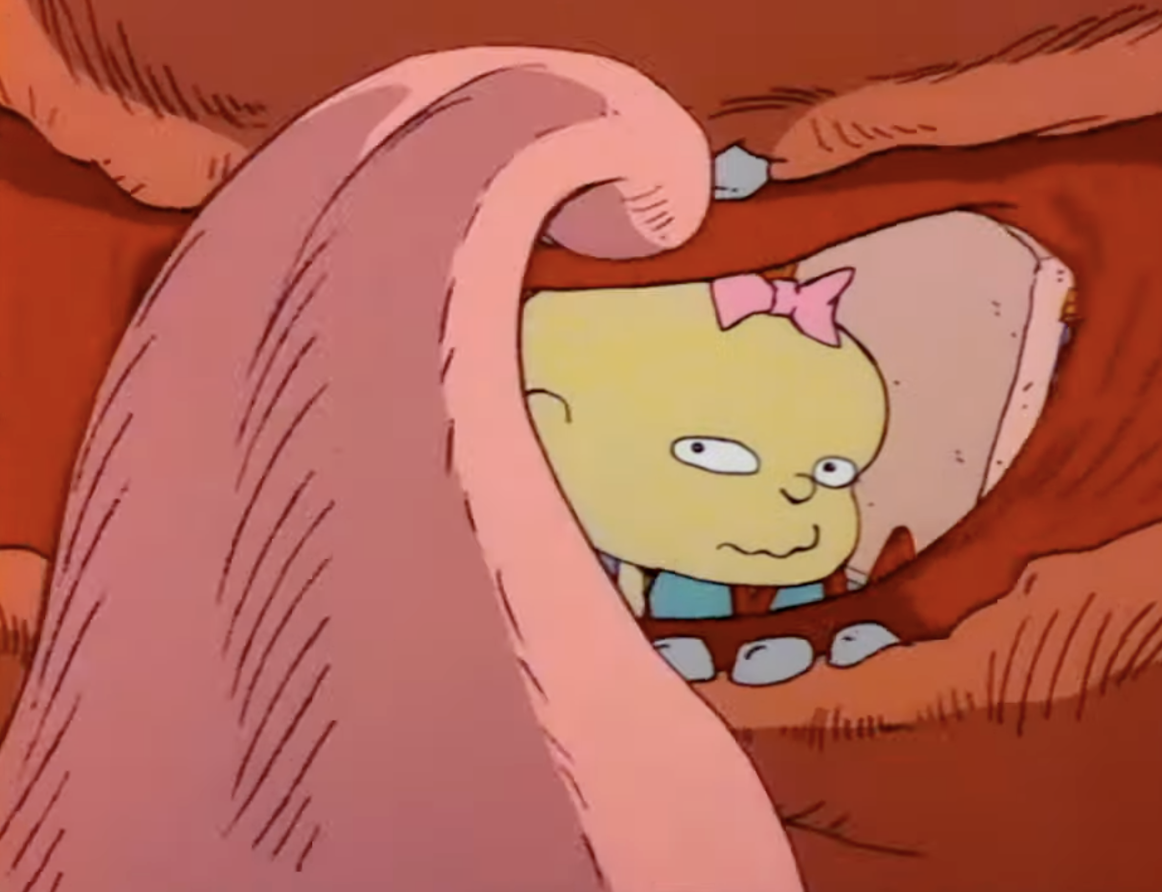
Figure 1. Still from Rugrats (1991) showing the point of view from the inside of a mouth. Courtesy of Nickelodeon, all rights reserved.
Rugrats (1991) and The Ren & Stimpy Show (1991) were Nickelodeon’s gateway drug to weirdness. They were absurd, atypical Saturday morning cartoons that ignited the production of more original shows that pushed the boundaries of the weird and offbeat. This sense of creepy visual and occasionally grotesque design was an unusual quality in children’s television shows in the early 1990s. Rugrats (1991) was influenced by Eastern European animation, primarily with Hungarian and Russian influences (Simensky 2011). Csupo had previously worked at a Hungarian animation studio called Pannonia Film, where he worked on animated television content from 1971-1975. The studio were the largest in Hungary at the time and it produced off-beat animated television programs like Frakk, a macskák réme [Tails, The Terror of Cats] (1971) and A kockásfülű nyúl [The Rabbit with Checkered Ears] (1977). Creators Klasky and Csupo, known for their studio, Klasky Csupo, spearheaded more original work for Nickelodeon after the success of Rugrats (1991),including Aaahh!!! Real Monsters (1994), The Wild Thornberrys (1998) and Rocket Power (1999). The Russian animator Igor Kovalyov worked with Klasky and Csupo on The Simpsons (1989), Rugrats (1991),and Aaahh!!! Real Monsters (1994). Csupo was inspired by the cartoon-like qualities of Kovalyov’s film Hen, His Wife (1989) and invited Kovalyov to come work at Klasky Csupo. Kovalyov directed the pilot for Aaahh!!! Real Monsters (Simensky 2016), and the gritty, rough texture and strange characters are visible in both Kovalyov’s film and pilot episode.
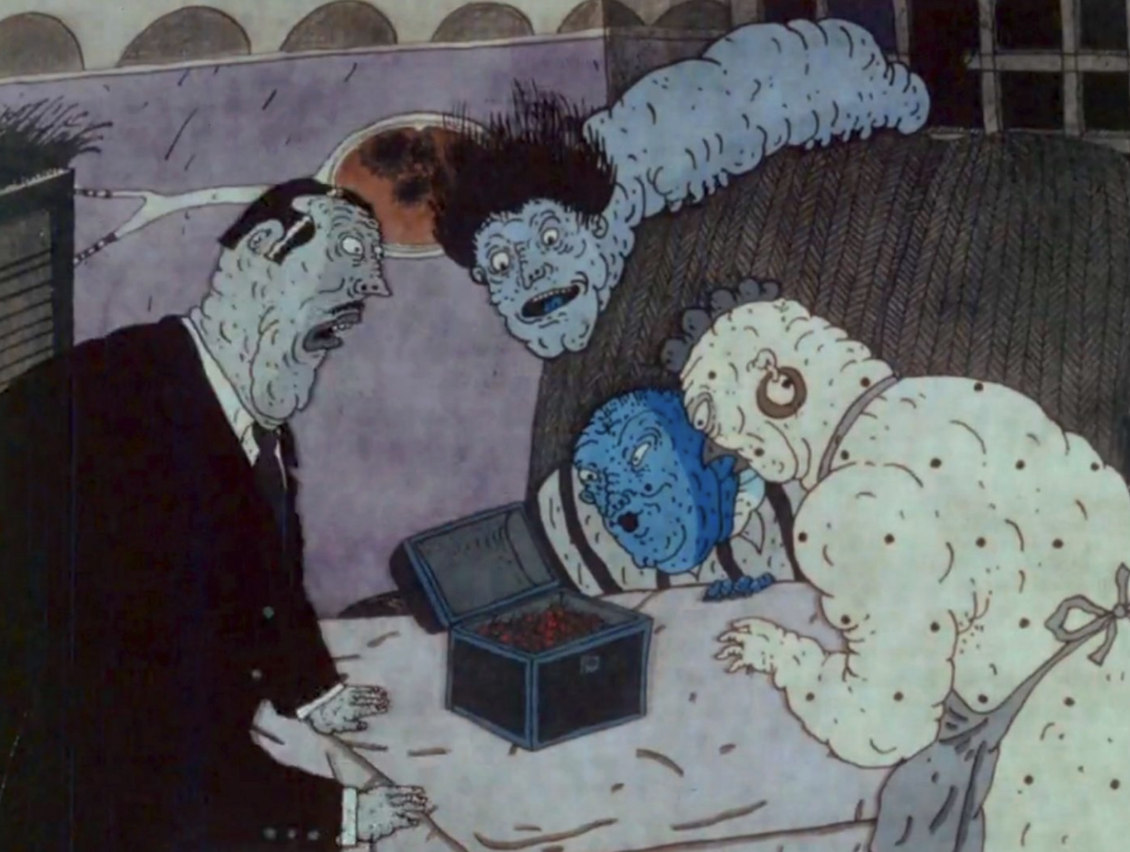
Figure 2. Still image of the four characters examining a box in Hen, His Wife (Igor Kovalyov, 1989).
Nicktoons diverged from the Disney-style animation summarized in Frank Thomas and Ollie Johnston’s 12 principles of animation (Thomas, 1995), only borrowing the exaggeration principle for their character performance and humor. The movement and visual language of the characters feel less “realistic” than most Disney cartoons of the same era created during Disney’s renaissance spanning 1989-1999. Nicktoons pushed the boundaries of what was “kid friendly” on cable television in the 1990s with its grotesque, slapstick humor. John Kricfalusi, the creator of The Ren & Stimpy Show (1991), was influenced by wacky Old Hollywood cartoons, such as the animation style of Bob Clampett—a renowned animator behind Warner Bros. Animation’s animated short film Looney Tunes (Simensky, 2011). Clampett was known for energetic, surreal sequences, including Porky in Wackyland (1938) and The Great Piggy Bank Robbery (1946). The Ren & Stimpy Show (1991) brought its own level of slapstick and weirdness, and broke away from the more classic Hollywood aesthetic. The show has become known for its “gross ups,” extreme close-up frames showcasing a visually disturbing and funny moment from the cartoon. These frames highlighted a moment of exaggeration in terms of design and performance: holding on a frame that pushed the boundaries of the grotesque.
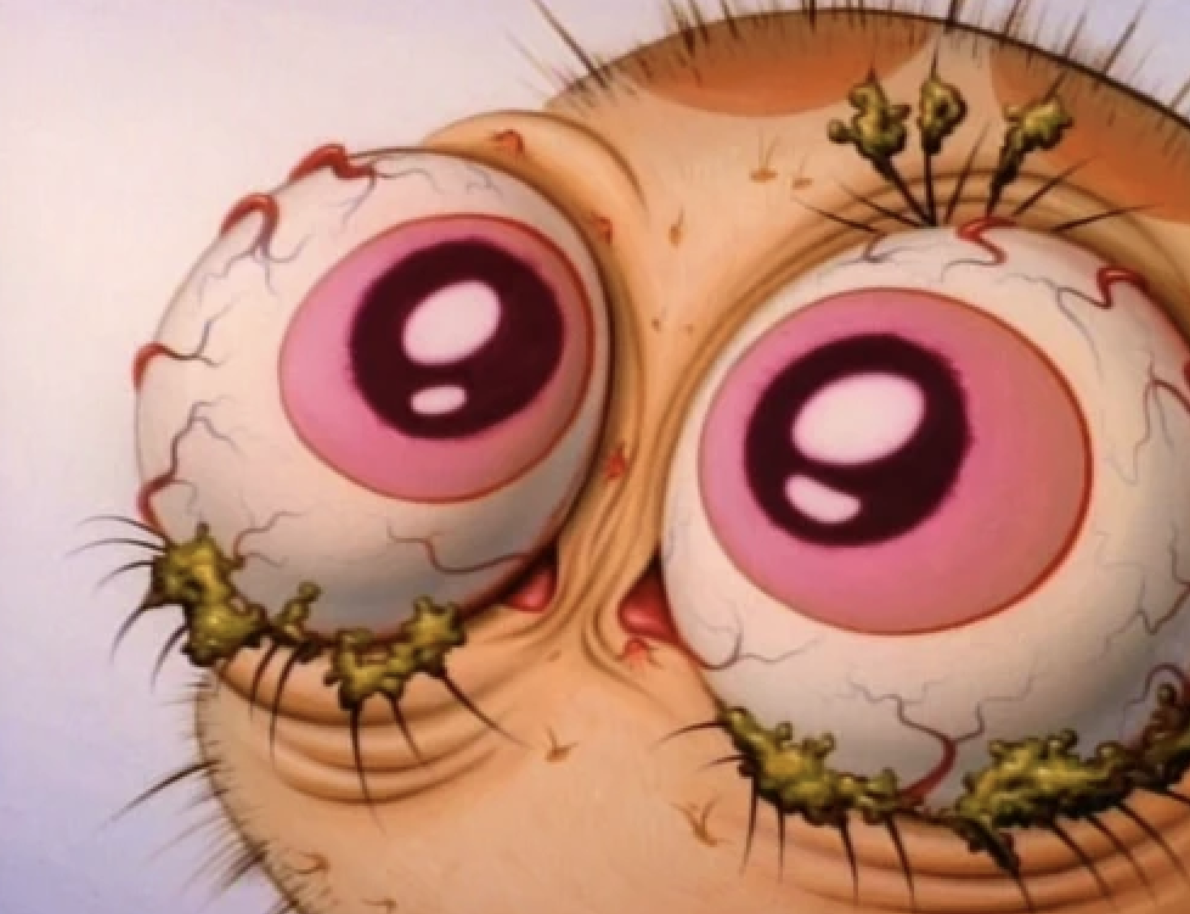
Figure 3. A gross up of Ren from The Ren & Stimpy Show (1991). Courtesy of Nickelodeon, all rights reserved.
References
Aaahh!!! Real Monsters, (US 1994, Nickelodeon).
Hen, His Wife, (RU 1989, Igor Kovalyov).
Rugrats, (US 1991, Nickelodeon).
Simensky, Linda (2011) Funny Pictures: Animation and Comedy in Studio-Era Hollywood. Los Angeles: University of California Press.
Simensky, Linda (2004). Nickelodeon Nation. New York: New York University Press.
Simensky, Linda (2016, August 17). Ottawa Animation Festival 40th Anniversary Look-Back: ‘Hen, His Wife’. Cartoon Brew, https://www.cartoonbrew.com/events/ottawa-animation-festival-40th-anniversary-look-back-henwife-142531.html.
Snetiker, Marc (2016, August 11). Nicktoons 25th anniversary oral history of Rugrats, Doug, Ren & Stimpy. Entertainment Weekly, https://ew.com/article/2016/08/11/nicktoons-25th-anniversary-oral-history-doug-rugrats-ren-stimpy/.
The Ren & Stimpy Show, (US 1991, Nickelodeon).
Thomas, Frank; Johnston, Ollie (1995 [1981]). The Illusion of Life. Disney Animation. New York: Disney Editions.
Eva Grandoni graduated from The University of Southern California with an MFA in Animation and Digital Arts in 2020 and is currently an assistant professor of animation at the University of Maryland, Baltimore County. Eva is an artist and animator who loves to make people laugh, and her interest in animation history and ‘90s cartoons influences her work both conceptually and technically. She is interested in exploring the grotesque in comedy by melding off-putting imagery with traditional cartoonish methods.