Humour has been a consistent thematic thread throughout my practice. My first short, animated film, Family Favourites—a wry exploration of how emotionally fraught and dysfunctional Christmas can be—was screened on Channel 4 in 1990. The film drew on the tension between expectation and lived experience, exposing how events culturally framed as joyful can feel claustrophobic, pressurised, and emotionally demanding. Animation and humour became tools for articulating what is often left unsaid, allowing difficult or socially uncomfortable experiences to be explored through exaggeration, irony, and visual metaphor.
This essay aims to examine animated television narratives that use dialogue and story to deliver critical social commentary, shaped by the visual language of animation. The medium enables humour to emerge through both performance and visual design, allowing social critique to be communicated across multiple expressive levels. Humour operates as a powerful critical device, enabling complex feelings about society, family, and obligation to be expressed without resorting to didacticism. Through exaggeration and absurdity, comedy creates a space for recognition and reflection, allowing audiences to acknowledge shared anxieties around family roles, social performance, and emotional labour. As Mikhail Bakhtin (1984) argues in his analysis of the carnivalesque, humour temporarily inverts power structures, making the familiar strange and the authoritative ridiculous. Within animation, this inversion is amplified by the medium’s freedom from realism and its capacity for symbolic distortion.
This approach strongly influenced early animated sitcoms such as Wait Till Your Father Gets Home exploring domestic life through generational and ideological conflict. The series staged tensions between a conservative, right-wing father and his countercultural children—a hippy son and a feminist daughter— reflecting broader clashes between traditional values and emerging youth culture of the 1970s. Exaggerated character designs encode ideological positions, with physical traits signalling generational and cultural conflict before it is articulated verbally. Harry Boyle, the father, has a square jaw, stocky body and conservative haircut. His physical solidity connotes rigidity—politically and emotionally. Chet, the hippy son, has elongated limbs, slouched posture, drooping eyelids and unkempt hair. His body appears loose and anti-structural. Alice, the feminist daughter has an assertive stance and is not drawn as conventionally “fashion-model thin.” Irma, the mother, fits into the stereotype of modest suburban attire with an apron, rounded silhouette and small waist – post-war ideal of femineity.
This lineage can be traced further back to political caricaturists such as James Gillray and William Hogarth, whose use of image and text to satirise power and social behaviour established a visual language that continues to inform contemporary political satire. Their work laid the foundations for modern political cartoonists such as Steve Bell and Roger Law, whose practice demonstrates how exaggeration and grotesque imagery can function as tools of critique rather than mere ridicule.
Roger Law, co-creator of Spitting Image, has described caricature as a form of truth-telling through distortion, arguing that satire works because it “pushes things beyond realism in order to make them recognisable” (Law, 2007). Each puppet isolates and magnifies a perceived trait. Margaret Thatcher’s nose became enlarged and angular, cheek bones prominent with a fixed predatory smile and heavy, helmet-like hair, the ‘Iron Lady’. She occupied male-coded power with broad shoulders, masculine tailoring and an aggressive physical posture. Exaggeration, in this sense, does not obscure reality but clarifies it. Law further suggests that humour lowers resistance, noting that “once you make people laugh, you’ve got them—then you can slip the knife in” (Law, 2014). This observation underscores the subversive potential of comedy: laughter disarms, allowing critique to operate covertly rather than confrontationally. This tradition feeds directly into animated television satire such as 2DTV, produced by former staff from Spitting Image. Broadcast between 2001 and 2002, 2DTV translated the grotesque, exaggerated philosophy of puppet-based political satire into a two-dimensional animated form.
Contemporary animation continues this tradition in varied and nuanced ways. Rebecca Sugar’s Steven Universe employs humour, visual warmth, and musical storytelling to explore LGBTQ+ identity, same-sex relationships, and emotional vulnerability. In the episode “Mindful Education” (2016) a gentle humour emerges from Steven and Connie’s awkward emotional exercises. Soft visuals and understated comedy sustain a light tone while addressing trauma and emotional overload. The character construction relies heavily on circular and oval shapes with minimal sharp angles. Steven is almost completely made up of rounded forms encoding emotional openness and vulnerability. The palette is distinctive with muted pinks, lavenders, teals and peaches making the scenes nostalgic and intimate. The aesthetic promises safety and the narrative delivers psychological complexity.
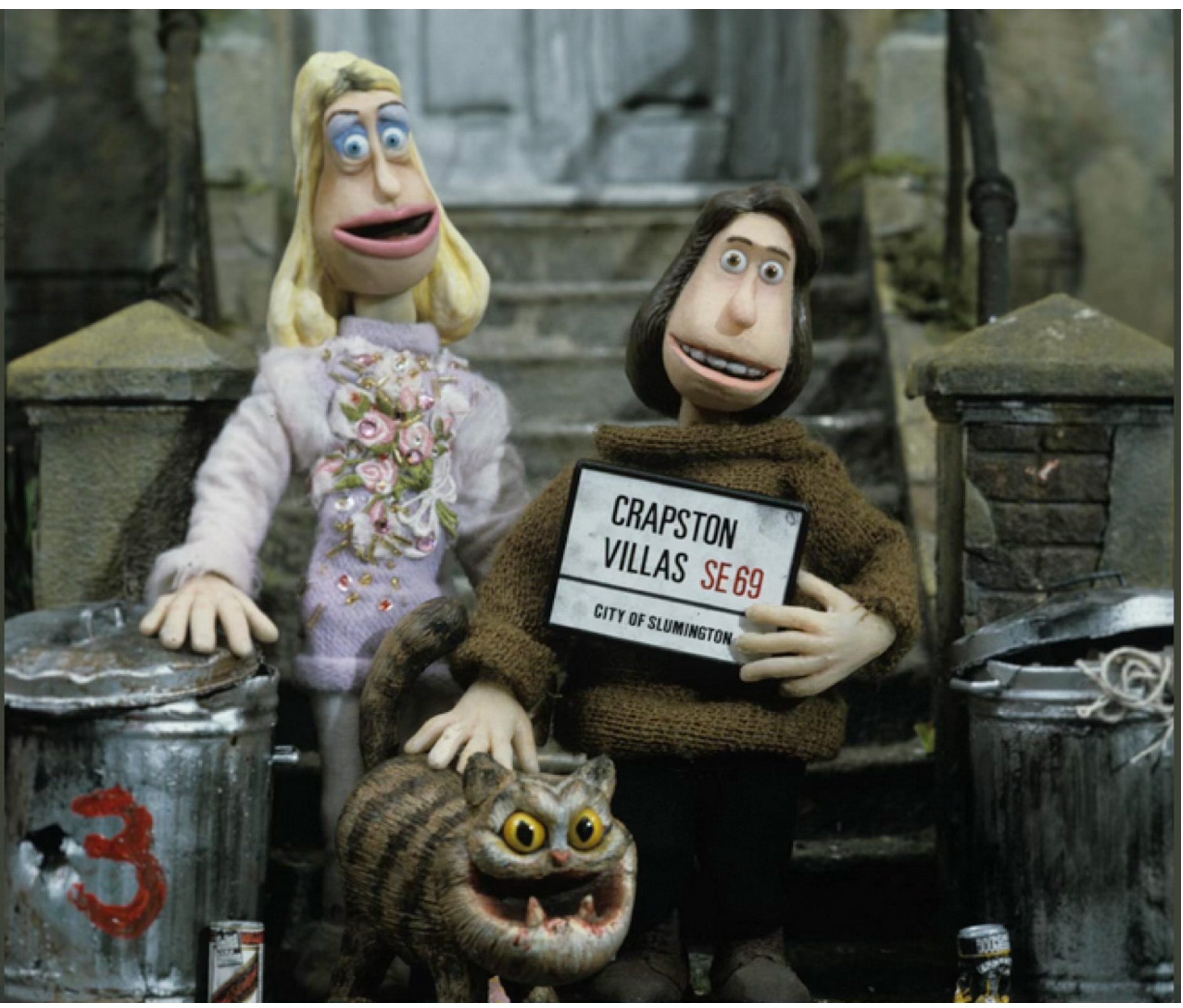
Fig 1. Publicity from Crapston Villas. Channel 4. Copyright Sarah Ann Kennedy
When contrasted with overt political satire such as 2DTV and Spitting Image, Steven Universe demonstrates an alternative mode of animated subversion, in which humour operates through warmth, awkwardness, and emotional understatement rather than ridicule. Together, these examples illustrate the breadth of animation’s critical potential, showing how humour can function both as a weapon of satire and as a vehicle for care, intimacy, and ethical reflection.
Crapston Villas, an animated soap opera for Channel 4, I created in the nineties, addressed themes of poverty, single motherhood, sexuality and racial diversity at a time when such representations were far from mainstream. In these contexts, humour and visual comedy function as mechanisms for visibility, allowing marginalised experiences to be foregrounded without alienating audiences. The character designs were not abstract caricatures invented in isolation but rooted in direct urban observation of London life. A grotesque realism influenced by my lived observations. Caricature drawn from urban texture rather than fantasy or celebrity distortion. The everyday seen clearly enough to be uncomfortable and then amplified to be funny exposing the micro-politics of everyday life.
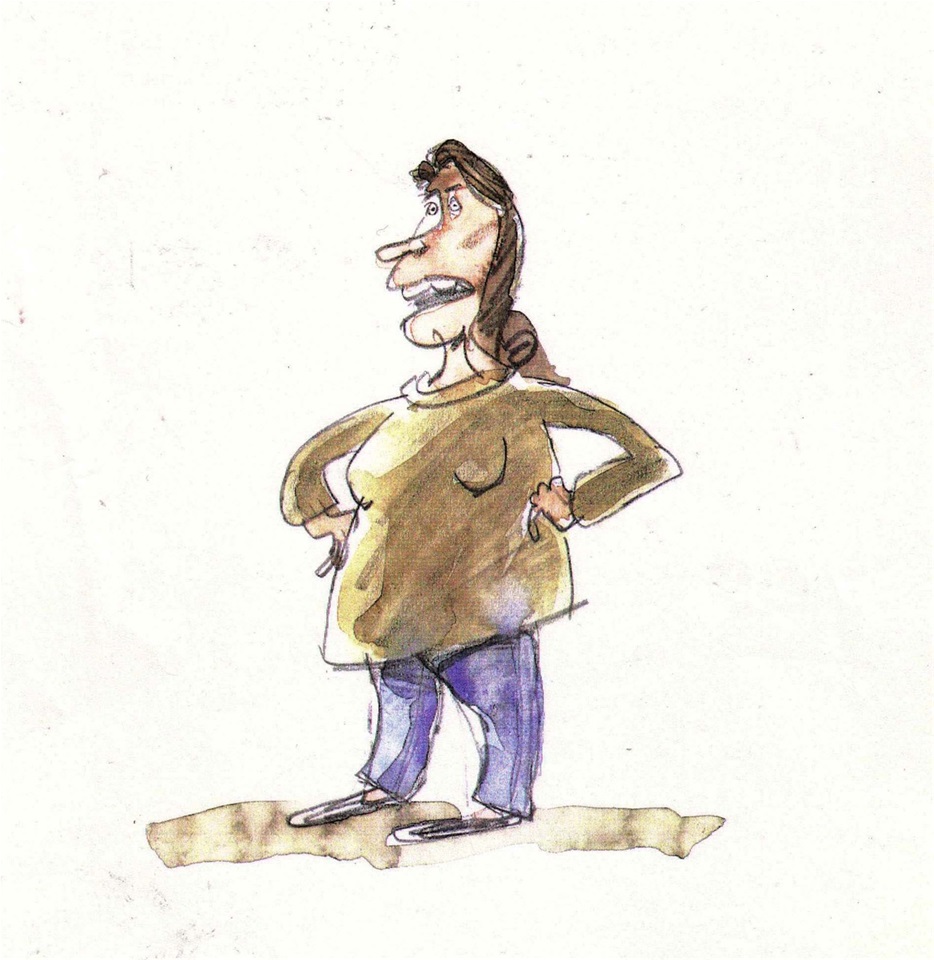
Fig 2. Original Drawing of Sophie by David Stoten. Copyright Sarah Ann Kennedy.
While audiences are drawn in by colour, character, and comedy, these animated worlds quietly but effectively challenge accepted norms. This is the enduring power of humour and animation: the ability to smuggle subversion into the familiar, using laughter as a vehicle for social and political critique.
References:
Bakhtin, M. (1984) Rabelais and His World. Bloomington: Indiana University Press. Hutcheon, L. (1994) Irony’s Edge: The Theory and Politics of Irony. London: Routledge.
Law, R. (2007) Interview in Bell, S. and Law, R. Spitting Image: A Workshop Manual. London: Thames & Hudson.
Law, R. (2014) Quoted in Hadfield, A. Comedy and the Politics of Subversion. London: Bloomsbury.
Sarah Ann Kennedy-Parr worked in the British animation industry as a writer and director for two decades before moving into higher education. In the 1990s, she created and directed a funny animated soap opera called Crapston Villas for Channel 4. Kennedy-Parr also developed, wrote and created another comedy series called Nights for Channel 4, an innovative hybrid production integrating live action and animation. Her professional portfolio extends to children’s television, where she has written for Peppa Pig and contributed as a voice actor as Miss Rabbit (Peppa Pig), Nanny Plum (Ben and Holly’s Little Kingdom), and Dolly Pond (Pond Life). Kennedy-Parr is currently MA Course Leader in Animation and Coordinator of Postgraduate Design Programmes at the University of Central Lancashire. She examines gendered structures within the animation industry and their impact on creative labour and representation. Recent publications include “Reappropriating Cultural Memory of the Preston Lock-Out” (Transactions of the Historic Society of Lancashire and Cheshire, Vol. 173, 2024).