Sixteen years after it first aired, I am watching TingaTinga Tales with my toddlers, who are two and four. They chuckle at the gags and ask me to point out which characters I designed. After two episodes, they have nearly exhausted their screen time and want only their current favorite dinosaur show. As I revisit these old episodes, I am overcome by nostalgia for the two years I spent working on the production, first as a Character Designer and later as a Designer and Animator. Alongside that nostalgia, however, is another realization: the show still surfaces as a textbook example of cultural appropriation in discussions of the evolution of Kenya’s animation industry. But was that ever the right diagnosis?
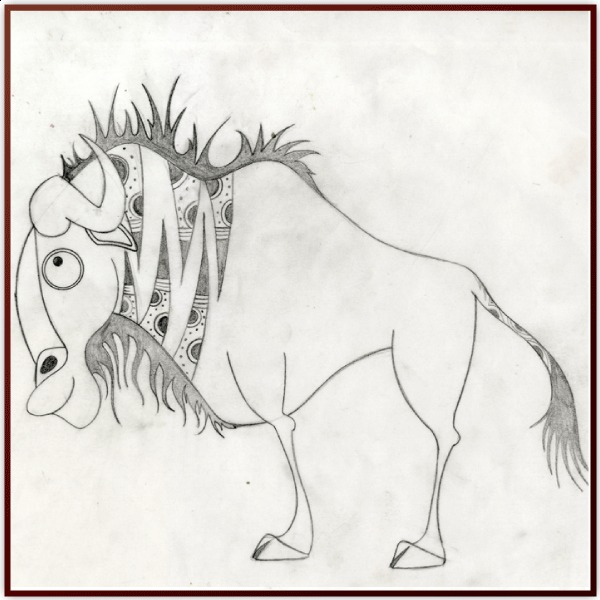
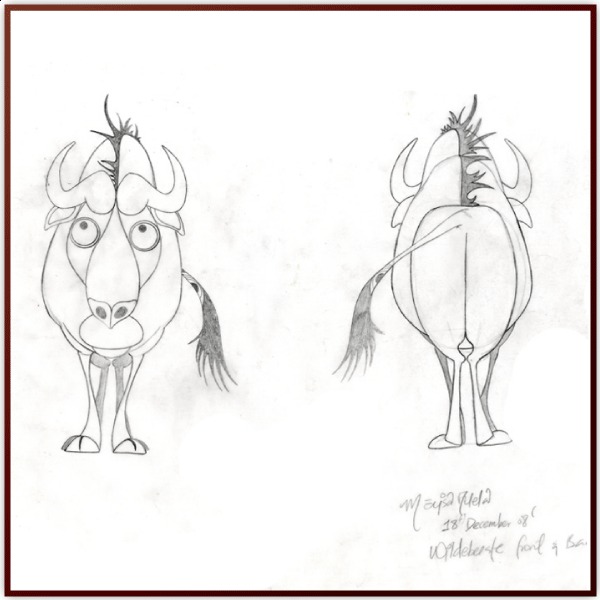
Figure 1: Selection of character designs by the author for TingaTingaTales
For an animated children’s television series developed in collaboration with the Kenyan studio HomeBoyz and made by a production team that was approximately 70 percent Kenyan, the more important questions may lie elsewhere: in the murkier terrain of ownership, rights, credit, and business power within transnational media production. I approach claims of cultural appropriation in African animation with wariness, not because appropriation is unreal, but because broad labels can obscure the very histories of labor, collaboration, and creative exchange they claim to expose. In public discourse, cultural appropriation often functions as a powerful moral shorthand. It can name real histories of extraction, commodification, and misrepresentation. Yet when applied too quickly, especially in relation to African media production, it can flatten complex creative processes into neat narratives of theft and victimhood. Scholars have long noted that not every act of cultural borrowing belongs to the same ethical category, and that “appropriation” can encompass exchange, domination, exploitation, and transculturation rather than a single moral condition (Rogers, 2006).
TingaTinga Tales is often cited as a case of foreigners claiming ownership over African visual culture. That reading is attractive because it fits a familiar postcolonial script: European producers discover African aesthetics, package them for global children’s television, and profit from them. There is some reason this reading emerges. The series was commissioned for BBC’s CBeebies and developed through Tiger Aspect, a UK production company, in partnership with HomeBoyz Animation in Nairobi. Accounts of the production, including news coverage, interviews with producer Claudia Lloyd, and my own first-hand conversations with her, described the series as drawing inspiration from Tanzanian Tingatinga art while being produced through a Nairobi-based studio pipeline involving local designers, writers, musicians, and animators. Visually, the series combined hand-painted artwork by African artists with digital cut-out animation (Gibson, 2008; Animation World Network, 2008a).
Yet that apparent clarity begins to fray when one looks more closely at production. The Nairobi studio was built specifically for the series, and around thirty local workers were hired and trained across animation, design, editing, voice performance and music. The team, drawn from Kenya, Tanzania, the UK, New Zealand, and Australia, worked together across the production process. A production model that invests in local employment, skills transfer, and the growth of African animation infrastructure cannot be treated as ethically identical to one that merely mines African imagery from afar (Gibson, 2008; Warren, 2020).
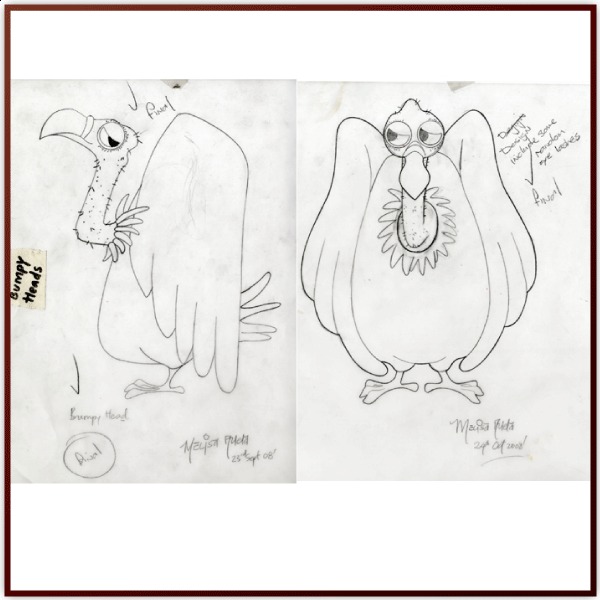
Figure 2: Vulture Character design by author with design notes from Director, Richard Jeffery
This matters because debates around cultural appropriation often privilege the symbolic origin of a form over the labor that transforms it in production. Tingatinga is a distinctive Tanzanian painting tradition associated with Edward Saidi Tingatinga and later generations of artists working in a recognizable shared style. It is an evolving style with its own history of repetition, variation, and adaptation. That does not mean every reuse is ethically innocent. It does mean that ethical judgment requires attention to how the style is engaged, who is involved, whether the source is acknowledged, and how power and benefits are distributed (Kilonzo, 2016).
On those questions, TingaTinga Tales presents a more layered case than many critiques allow. The series did not hide its influences. It was explicitly framed as drawing from Tanzanian Tingatinga art and African animal folklore/fables. The title itself signaled interpretation and adaptation rather than a claim to be the art movement itself. My own experience on the production complicates the public narrative further. While the pilot may have involved a different process, the characters for the fifty-two-episode series were designed within the studio pipeline by three Kenyan character designers, all credited. Many were not simply lifted from pre-existing Tingatinga paintings, and some did not exist in Tingatinga art at all (see figure 1 and 2). Sketches were developed in-house and passed to Tingatinga artists, who interpreted them through their own painterly vocabulary. Those paintings were then retouched and remixed by the design team into digital cut-out animation-ready assets. Thus, it was not a case of untouched folk art being scanned into digital form. Instead, it was an iterative, collaborative, multi-stage process of sketching, painting, adaptation, and animation.
To reduce that workflow to a singular act of appropriation is to risk erasing the contributions of the African designers, painters, animators, writers, and musicians whose labor materially shaped the work. My argument is not that critical questions should never be asked. On the contrary, they must be. But in this case, broad condemnations risk obscuring more than they reveal. From the credits alone, it is evident that African practitioners were integral to the series and that the project contributed to professional training and the growth of animation infrastructure in Nairobi. Even if one remains critical of unequal global ownership structures, it is difficult to sustain a neat narrative in which Africans appear only as passive sources whose culture was taken by outsiders (Gibson, 2008).
There is a broader issue here for African media criticism. When all transnational cultural production involving Western capital is treated as appropriation by default, African practitioners risk being recognized only as symbolic origin points rather than as contemporary makers. Their labor becomes legible only as heritage, tradition, or raw material. Their work within the production pipeline becomes secondary to a moral drama staged elsewhere. In this sense, imprecise anti-appropriation discourse can inadvertently re-inscribe a colonial habit of seeing Africa primarily as source material rather than as a site of modern, skilled, and co-authored cultural production (Moody, 2006).
This is not to suggest that all collaborations should be celebrated uncritically. Questions of ownership, rights, profit, visibility, and decision-making power remain crucial. In the case of TingaTinga Tales, however, those concerns point beyond a simplistic narrative of cultural theft. The more pressing issue may lie not in whether African culture was visibly acknowledged, but in how African creative labor was positioned within a transnational business structure shaped by external ownership and unequal control. A production can be collaborative at the level of making and still unequal at the level of rights, credit, and long-term benefit.
What is needed, then, is a more careful critical vocabulary. Rather than using cultural appropriation as a catch-all label, we should distinguish among extraction, adaptation, collaboration, homage, stylistic translation, and co-authorship. We should ask not only where a style came from, but who made the work, how the production pipeline functioned, who was credited, who benefited, and what forms of cultural and industrial capacity were built in the process. In the case of TingaTinga Tales, those questions reveal a production that while undeniably transnational and uneven in power, was also deeply shaped by African practitioners whose contributions are too often erased by the very critiques that claim to defend African culture.
References:
Animation World Network. (2008a, June 26). ER acquires worldwide distribution rights to Tinga Tinga Tales. https://www.awn.com/news/er-acquires-worldwide-distribution-rights-tinga-tinga-tales
Animation World Network. (2008b, November 5). Penguin Group gets publishing deal on Tinga Tinga Tales. https://www.awn.com/news/penguin-group-gets-publishing-deal-tinga-tinga-tales
Gibson, O. (2008, June 26). Creators of Charlie and Lola will set up animation studio in Africa. The Guardian. https://www.theguardian.com/media/2008/jun/27/bbc.television1
Kilonzo, K. B. (2016). The authenticity of today’s Tingatinga art. Sanaa: Journal of Arts and Humanities, 1(1), 1–11. https://sanaajournal.ac.tz/index.php/sanaa/article/download/26/2
License Global. (2008). Entertainment Rights signs deal for Tinga Tinga Tales. https://www.licenseglobal.com/licensing-resources/er-signs-penguin-tinga-tinga-tales
Rogers, R. A. (2006). From cultural exchange to transculturation: A review and reconceptualization of cultural appropriation. Communication Theory, 16(4), 474–503. https://doi.org/10.1111/j.1468-2885.2006.00277.x Warren, M. (2020, August 31). Tinga Tinga Tales: The 10th anniversary of an African-British animated collaboration. Skwigly Animation Magazine. https://www.skwigly.co.uk/tinga-tinga-tales-african-british-animated-collaboration/
Dr. Melisa Achoko Allela is a creative technologist and educator whose work explores African animation, oral storytelling, and emerging media. She was also a Research Fellow at the RISD Movement Lab in 2023-2024 where she undertook work on developing Songa, an open access motion capture library of African movement forms. Her practice spans animation, interactive media, and research on how new and emerging technologies can be used to retell traditional works of African orature. Drawing on both scholarly inquiry and industry experience, she is also interested in questions of authorship, labor, representation, and technological change in African creative industries.