
Indonesia prides itself on a multicultural identity that is celebrated through the national motto, Bhinneka Tunggal Ika (unity in diversity). However, Chinese Indonesians, as the largest demographic of foreign descent, often face reductive media portrayals. This tendency is mirrored in its domestic animated series that portray Indonesian everyday life, where the very use of animation, as scholars like Gupta et al. (2022), Hilčenko, (2017) and Torre (2017) note, is an effective means for captivating younger audiences and shaping their formative perceptions. This influence carries significant weight in Indonesia’s demographic bonus era, where youth represent the dominant social and economic cohort (Sutikno, 2020)
Within this context, this text examines ethnic stereotyping through an analysis of the Chinese Indonesian characters in Adit & Sopo Jarwo (Riza, 2014) and Keluarga Somat (Nugroho, 2013). The analysis reveals a skewed application of exaggeration. Thomas and Johnston (1981) define this characteristic as a key principle of animation whereby the accentuation of a character’s essence is increased to provide clarity and appeal. However, the portrayals of Chinese Indonesian characters found in the beforementioned animations rely on outdated use of exaggeration that reduces characters to tropes and visual shortcuts that prioritise easy recognition over authenticity, instead of being grounded in real-life observation. This text argues that authentic, multilayered representation can only be achieved by collaboration with community members who hold lived experience. By investigating these visual choices, the following sections demonstrate how prioritising easy recognition risks reinforcing the very prejudices these series aim to overcome.
The Other Indonesian
Despite the deep roots of the ethnic Chinese in Indonesia, until today, they remain subjects of social prejudice within the society (Dawis, 2009; Onghokham, 2017). Various media in Indonesia further sustain the prejudice by often misrepresenting Chinese Indonesians for comedic purposes. Televised program often relies on exaggerated popular markers of Chineseness, which includes singsong tones, and thick accents to portray Chinese Indonesians. Apart from that, Chinese Indonesians are often depicted as having an arrogant personality with an immense greed for money. This resulted in many native Indonesians believing that ethnic Chinese are too greedy, ambitious and self-centred (Dhaneswara, 2023).
The potency of such portrayals lies in their ability to evoke stereotypes almost effortlessly, triggering harmful, ingrained social associations that affect the self-worth and identity of those targeted (Camp, 2013; Hom, 2008), which in this case is the Chinese Indonesian community.
Exaggeration and Stereotypes in Animation
Animation has been relying on exaggeration as one of its 12 foundational principles (Thomas & Johnston, 1981). This utilisation of exaggeration is complicated when applied to the portrayal of collective identities such as race, ethnicity, or culture as it risks falling into the harmful acts of stereotyping. Such practices contribute to the distortion of how certain ethnic groups are collectively perceived. Rose (2014) argues that animated film like Pixar’s Planes (Hall, 2013) still rely on cultural stereotypes for quick character identification and humour. These shallow portrayals are delivered via anthropomorphic forms that embed subtle racial cues, that children may internalise unconsciously.
Chinese Indonesians in Animation
The animated series Keluarga Somat (Nugroho, 2013) and Adit & Sopo Jarwo (Riza, 2014) depict Chinese Indonesian characters with similar role, occupation, and familial relationships. Both series present characters like Koh Wat and Babah Chang as neighbourhood grocery store owners and fathers. This repetition reinforces the stereotype that Chinese Indonesian identity is primarily defined by small business ownership.
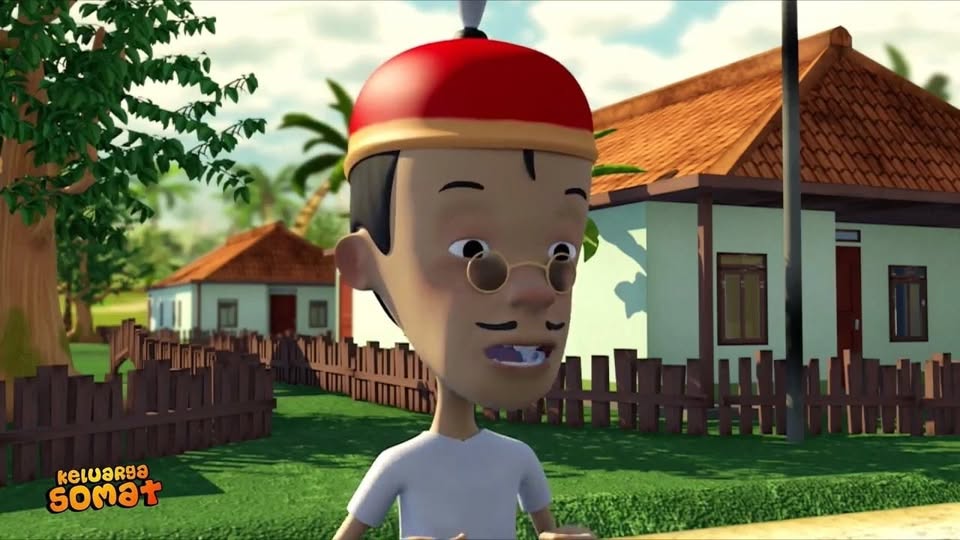
Figure 1.Screenshot of the main character Koh Wat in Keluarga Somat (Nugroho, 2013). © Dreamtoon Animation Studios. All rights reserved.
Excessive exaggeration is applied to physical attributes, behavioural patterns and symbolic representations. Characters are visualised with lighter skin and slanted eyes to signal East Asian physical traits (Edwards et al., 2010; Goh, 2024; Utheim et al., 2014; Yang et al., 2016). Costumes often appear forced and inauthentic, such as Koh Wat’s red Chinese-style round hat with a feathered top, which does not align with everyday reality.
Koh Wat and Baba Chang are portrayed as stingy and emotional characters who speak with thick accents and singsong tones. A key trait is how they refer to themselves using “Owe” or “Oe,” which both simply mean “I.” While most Indonesians use “Saya,” “Aku,” or “Gue” that originates from the Hokkien word Wa or 我 / Wǒ in mandarin, these characters are stuck using this dated expression, which is very uncommon in their daily life and mostly exists in media portrayals that are often performed by non-ethnic Chinese Indonesians.
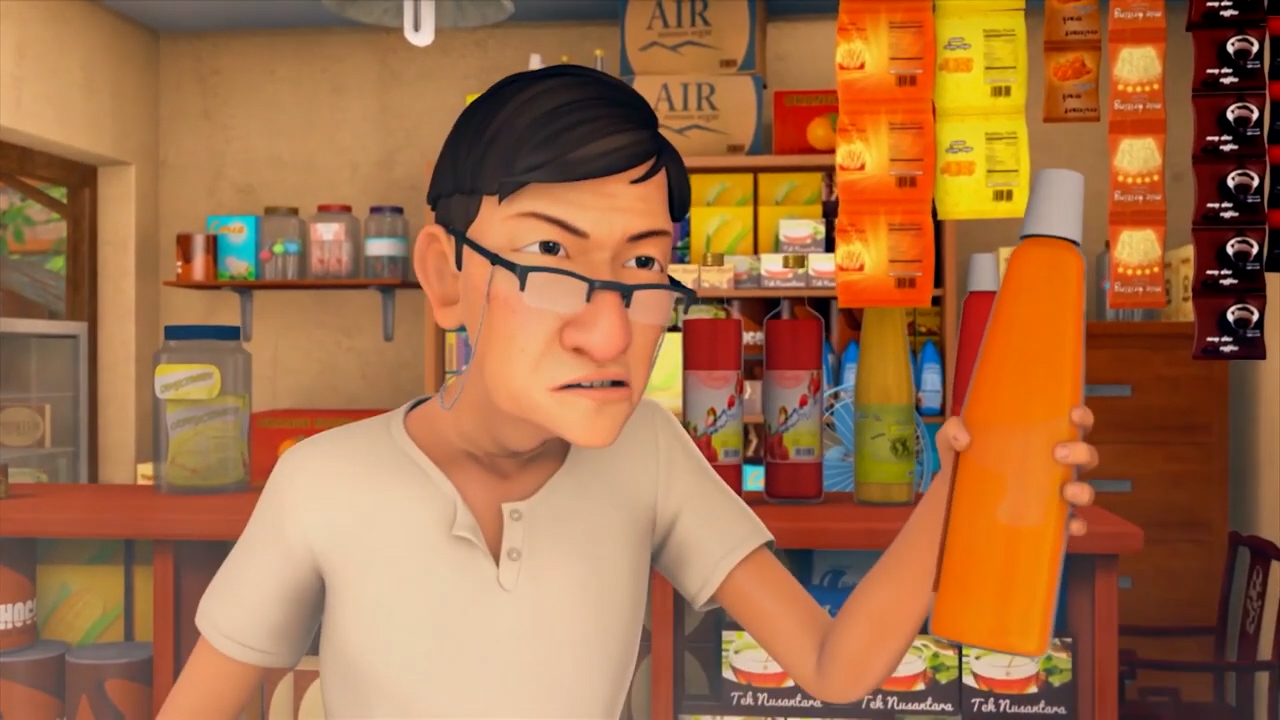
Figure 2. Screenshot of the main character Baba Chang in Adit & Sopo Jarwo (Riza, 2014). © MD Animation. All rights reserved.
In observing the speech patterns of the characters, it is apparent that they exhibit rhotacism or a speech articulation issue, where they cannot properly pronounce the “R” sound. This is obvious in phrases like “Lu Olang” instead of “Lu orang” (you people). This exaggerated “L” sound is a well-known trope in Indonesia used to caricaturise people of Chinese descent. This has become an axiomatic shorthand in Indonesian media to mark these characters as the other.
Beyond these behaviours, specific episodes reveal persistent tropes such as characters suddenly possessing hidden kung-fu skills or being depicted as excessively money-oriented. Such representations have the potential to nurture biased perceptions within Indonesian society toward fellow citizens of different ethnic backgrounds.
Towards Better Representation
The effort to include Chinese Indonesian characters in animation is in principle a positive step toward representing Indonesia’s multicultural society. However, it seems that these portrayals, are still heavily based on outdated stereotypes that can potentially perpetuate prejudice. This highlights a key aspect of animation as a moving image practice that works from entirely constructed environments. In animation, every character design, movement, and performance are a deliberate choice made within the production. This means that choosing to follow easy stereotypical tropes is actively planned into the characters.
The lack of direct connections with the Chinese Indonesian community might explains why these portrayals lack accuracy and empathy. Recent psychological research offers some supports for this where the idiom of putting yourself in someone else’s shoes is not enough to create accurate and empathetic representations. As Eyal et al., (2018) explain, improving interpersonal understanding will need direct communication and interaction with the group in question, not just imagining what it is like to be them. In other words, only through real dialogue and active involvement with the communities being portrayed can better representation be achieved. For Chinese Indonesian animation practitioners this means moving beyond the drawing board and into dialogue with the community to ensure that their work acts as a bridge for social cohesion rather than a tool for caricature.
References
Camp, E. (2013). Slurring Perspectives. Analytic Philosophy, 54(3), 330–349. https://doi.org/10.1111/phib.12022
Dawis, A. (2009). The Chinese of Indonesia and Their Search for Identity: The Relationship Between Collective Memory and the Media. Cambria Press.
Dhaneswara, N. (2023, April 21). Minority Feelings Chinese Ethnic in Indonesia. Proceedings of The 4th International Conference on Social Sciences, Humanities, and Arts. The 4th International Conference on Social Sciences, Humanities, and Arts. https://doi.org/10.33422/4th.icsha.2023.04.004
Edwards, M., Bigham, A., Tan, J., Li, S., Gozdzik, A., Ross, K., Jin, L., & Parra, E. J. (2010). Association of the OCA2 Polymorphism His615Arg with Melanin Content in East Asian Populations: Further Evidence of Convergent Evolution of Skin Pigmentation. PLoS Genetics, 6(3), e1000867. https://doi.org/10.1371/journal.pgen.1000867
Eyal, T., Steffel, M., & Epley, N. (2018). Perspective mistaking: Accurately understanding the mind of another requires getting perspective, not taking perspective. Journal of Personality and Social Psychology, 114(4), 547–571. https://doi.org/10.1037/pspa0000115
Goh, C. F. (2024). Diversity of Asian skin: A review on skin biophysical properties. Experimental Dermatology, 33(1), e14959. https://doi.org/10.1111/exd.14959
Gupta, A., Kumar, J., Tewary, T., & Virk, N. K. (2022). Influence of cartoon characters on generation alpha in purchase decisions. Young Consumers, 23(2), 282–303. https://doi.org/10.1108/YC-06-2021-1342
Hall, K. (Director). (2013, August 2). Planes [Animation]. Walt Disney Studios Motion Pictures.
Hilčenko, S. (2017). How Generation “Z” Learns Better? European Journal of Social Sciences Education and Research, 11(2), 379. https://doi.org/10.26417/ejser.v11i2.p379-389
Hom, C. (2008). The Semantics of Racial Epithets. The Journal of Philosophy, 105(8), 416–440. https://doi.org/10.5840/jphil2008105834
Nugroho, E. (Director). (2013, June). Keluarga Somat (No. 511) [Broadcast]. Dreamtoon Animation Studios.
Onghokham. (2017). Migrasi Cina, kapitalisme Cina, dan anti Cina (Cetakan kedua). Komunitas Bambu.
Riza, D., & Indrajaya (Directors). (2014, January 27). Adit & Sopo Jarwo (No. 49) [Broadcast]. MD Animation.
Rose, S. (2014, April 6). Repressed Brits, evil Mexicans, Arab villains: Why are Hollywood’s animated movies full of racist stereotypes? [News Article]. The Guardian. https://www.theguardian.com/film/2014/apr/06/repressed-brits-evil-mexicans-arab-villains-hollywood-animated-movies-stereotypes
Sutikno, A. N. (2020). BONUS DEMOGRAFI DI INDONESIA. VISIONER : Jurnal Pemerintahan Daerah di Indonesia, 12(2), 421–439. https://doi.org/10.54783/jv.v12i2.285
Thomas, F., & Johnston, O. (1981). The Illusion of Life: Disney Animation [Book]. Abbeville Press.
Torre, D. (2017). Animation: Process, cognition and actuality [Book]. Bloomsbury Academic. https://doi.org/10.5040/9781501308178
Utheim, T., Hodges, R. R., & Dartt, D. A. (2014). The Eyelid. In Pathobiology of Human Disease (pp. 2201–2215). Elsevier. https://doi.org/10.1016/B978-0-12-386456-7.04712-2
Yang, Z., Zhong, H., Chen, J., Zhang, X., Zhang, H., Luo, X., Xu, S., Chen, H., Lu, D., Han, Y., Li, J., Fu, L., Qi, X., Peng, Y., Xiang, K., Lin, Q., Guo, Y., Li, M., Cao, X., … Su, B. (2016). A Genetic Mechanism for Convergent Skin Lightening during Recent Human Evolution. Molecular Biology and Evolution, 33(5), 1177–1187. https://doi.org/10.1093/molbev/msw003
Christian Aditya is a PhD candidate at the School of Media and Communication, RMIT University, Australia. His doctoral research forms part of a creative practice PhD that explores Chinese Indonesian identity through the creation of non-fiction animation. Through a combination of personal reflection and collective narratives, his work engages with themes of cultural inheritance, memory, and identity, aiming to reimagine how underrepresented histories can be expressed through animated forms. His animation practice involves a multi-technique approach across 2D and 3D, ranging from traditional analogue methods to digital tools.