
Deadline: February 6, 2026
Guest editor: Dr. Boukary Sawadogo
African co-produced animated series and films like Kizazi Moto: Generation Fire (2023), Supa Team 4 (2023), Iwaju (2024), and Iyanu (2025) has recently caught global audiences’ attention thanks to their wider distribution through the American media and entertainment companies, such as Disney, Netflix, and Cartoon Network. Yet these recent productions follow a century old tradition of animation practices in Africa, which features diverse styles and techniques, produced by both independent artists and established studios.
However, African animation remains relatively understudied by film and/or animation scholars. In this respect, the late animation historian Giannalberto Bendazzi once posed a timely question in A Moving Subject (2021: 47): “If the topic is African cinema animation, a question will certainly be asked: What do we really know about it? Does anybody know anything about it?” (p. x). The answer to Bendazzi’s query, unfortunately, is that substantial and consistent scholarly investigations of African animation have yet to be developed in the field of animation studies. So, this theme of African animation seeks to host a multi-faceted analysis of African animation, contributing to discovery, appreciation, and new critical lenses.
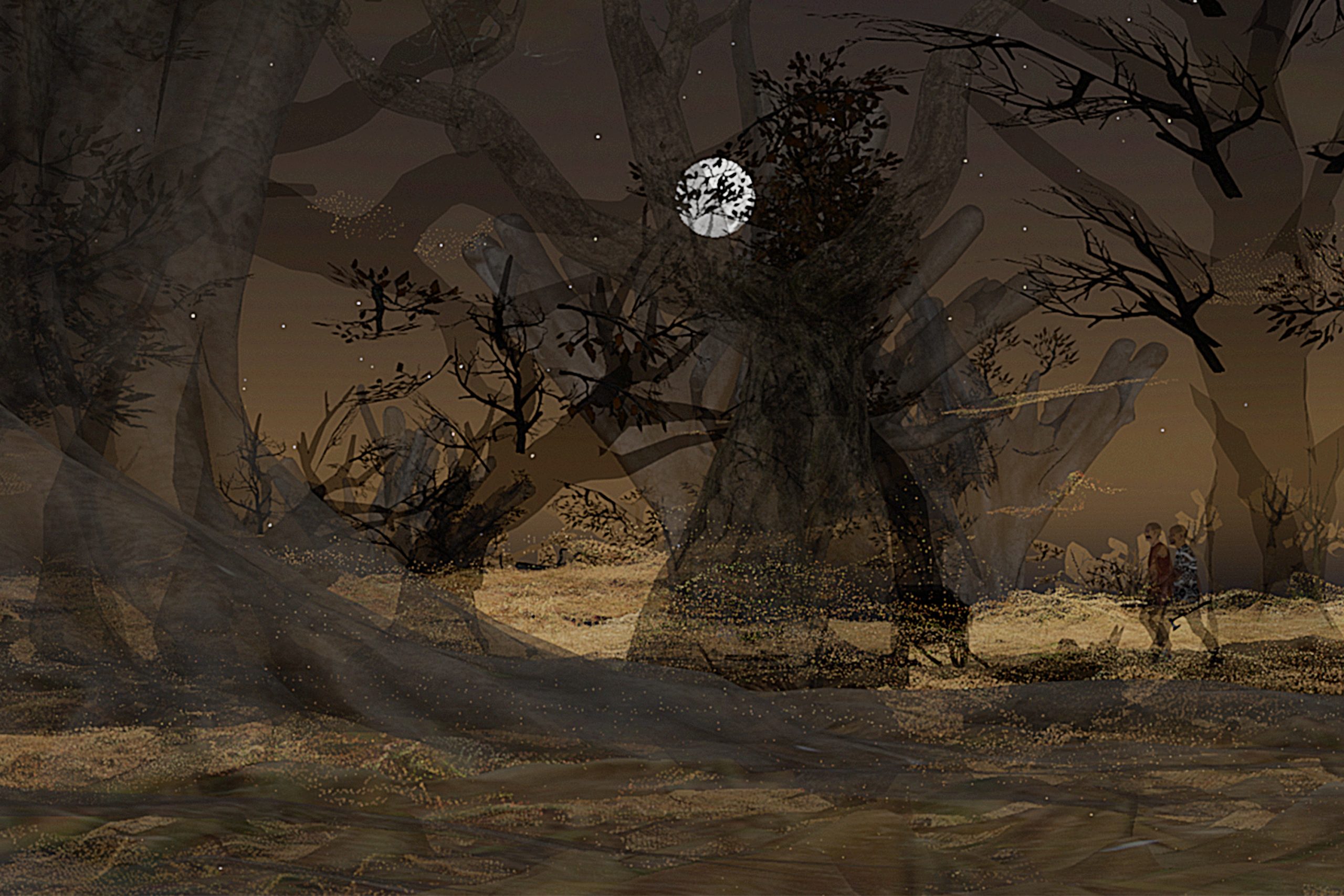
Figure 1: A poetic image depicting a seemingly peaceful night against the backdrop of unfolding drama as albinos are hunted for their body parts which can be sold up to $75000 a piece. Released in 2020 by Malian Moïse Togo, the short $75000 is part of a growing corpus of social commentary shorts by the younger generation to address a wide range of sociopolitical and economic issues.
$75000 ©️Moïse Togo
For this theme, we will approach African animation in its broadest and most diverse configurations, with topics that may include, but are not limited to, the following topics:
- Historical investigations of animation practice in Africa, including pioneers or major figures, national histories of animation, and transnational histories of coproduction;
- Identification of the landscape of animation festivals in Africa;
- Discussions on African animation studios;
- Theoretical discussions on African animation, like adaptation, intermediality, oral storytelling, aesthetic identity;
- The African animation industry and the intervention of Netflix, Disney, or Cartoon Network;
- Animation training and education in Africa;
- National and local ecosystems of emerging animation industries in specific African countries.
We welcome posts that are:
- Between 800 and 1,000 words discussing any aspect of the above topics.
- Forwarded as a Microsoft WORD file.
- Include at least one image to visually support their argument/post.
- The images must be less than 2 MB in size per image and sent as individual files.
- Please indicate where the images should be placed in the text, including image caption(s) and credits. All permissions are the responsibility of the contributor.
- Include a short bio of 100 words max.
- Include 3 keywords.
Please fill it in all the required information for your submission here: Submission form
Please contact Boukary Sawadogo via bsawadogo[at]ccny.cuny.edu with any questions, and CC co-editors Carmen Hannibal and Anastasiia Gushchina on blog[at]animationstudies.org.