Category Archives: Standalone Posts

Doom! Zim The Invader

Doom! Invader Zim as Rasquache: Its Impact On Animation and Latinx Aesthetics
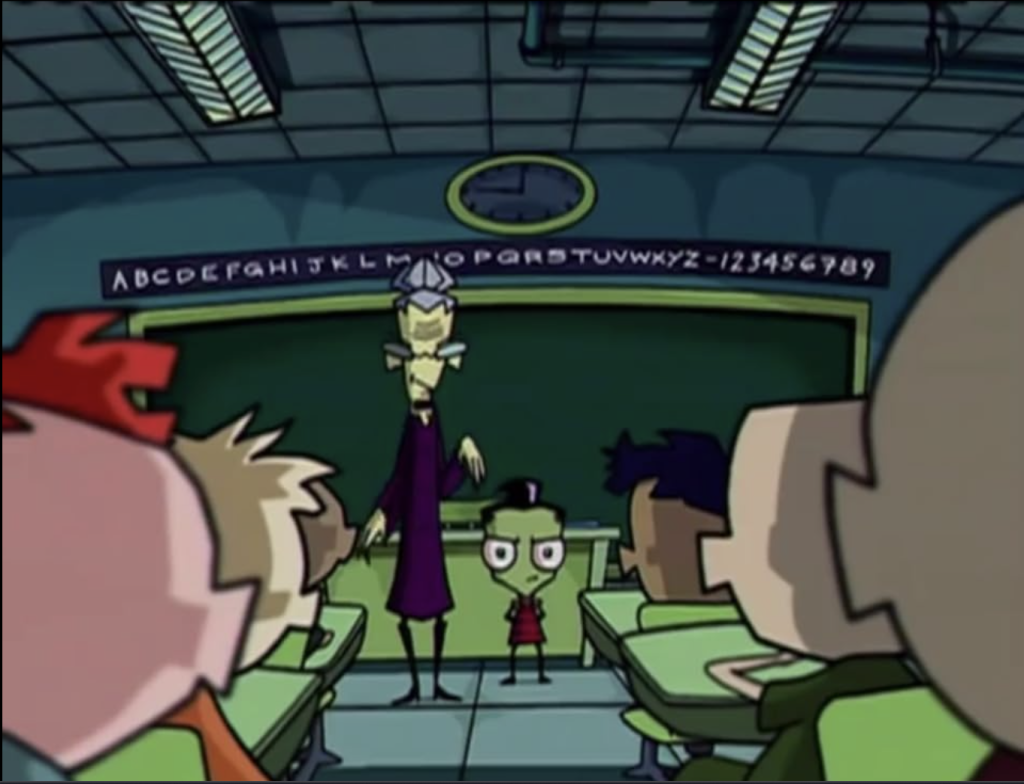
In 2001 Nickelodeon began airing a peculiar yet profoundly intriguing animated show that caught audiences off-guard: Invader Zim (2001) created by Jhonen Vasquez. This dark animated comedy pushed the limits of how horror can be visualized in children’s programming, all while gaining an impressive cult following. Though Invader Zim stopped airing in 2006, fans wanted … Continue reading Doom! Invader Zim as Rasquache: Its Impact On Animation and Latinx Aesthetics→

Animating Menstrual Pain through Metaphors and Metamorphosis

Animating Menstrual Pain through Metaphors and Metamorphosis

The sensation of pain is invisible (Munday et al., 2020). It is private, shifting, and impossible to pin down. So, how do we communicate something so visceral and elusive? The answer seems to lie in metaphor. According to Conceptual Metaphor Theory (Lakoff & Johnson, 1980), metaphors are not just decorative language. They help us make … Continue reading Animating Menstrual Pain through Metaphors and Metamorphosis→

To the Moon on a Whim in A Grand Day Out (1989)

To the Moon on a Whim in A Grand Day Out (1989)

This article examines the first installment in Nick Park’s Wallace & Gromit series A Grand Day Out (1989) through the lenses of the oneiric and the Dionysian. While scholarship on Aardman Animations tends to emphasize its stop-motion materiality and British eccentricity, less attention has been given to the dreamlike structure of the first entry and its playful subversion of traditional … Continue reading To the Moon on a Whim in A Grand Day Out (1989)→

Time for Bed: The Dreamlike world of Dougal and the Blue Cat (1970)

Time for Bed: The Dreamlike world of Dougal and the Blue Cat (1970)

Dougal and the Blue Cat is the 1970 animated film by Serge Danot that features a mysterious voice and a cat named Buxton that plot to take over the world and turn it blue. The animated film is based on the British tv series The Magic Roundabout (1965-1977), a series primarily aimed at children but … Continue reading Time for Bed: The Dreamlike world of Dougal and the Blue Cat (1970)→

Wallace and Gromit and the case for Claymation in a world of AI

Wallace and Gromit and the case for Claymation in a world of AI

The silent penguin Feathers McGraw has become one of the most famous British animated villains thanks to Aardman’s distinct Claymation style. First introduced in The Wrong Trousers (Park, 1993), McGraw now returns more than 20 years later in Wallace and Gromit: Vengeance Most Fowl (Park and Crossingham, 2024), hijacking Wallace’s new invention – a smart … Continue reading Wallace and Gromit and the case for Claymation in a world of AI→

A Narrative-driven Approach to Staging Environments for the 360-Degree Animation Coffin Room (2024)

A Narrative-driven Approach to Staging Environments for the 360-Degree Animation Coffin Room (2024)

This contribution is the second post of a two-part series on the creative production of Wing Yan Kwan and Lam Le’s Coffin Room (2024). Confined in a small apartment, cramped with a tiny bunk bed, old furniture, canned foods, and scattered with used tissues and towels. Suffocated in dirty air, constantly coughing and struggling to … Continue reading A Narrative-driven Approach to Staging Environments for the 360-Degree Animation Coffin Room (2024)→

Exploring Social Issues Through 360-Degree Animation in The Making of Coffin Room (2024)

Exploring Social Issues Through 360-Degree Animation in The Making of Coffin Room (2024)

This contribution is the first post of a two-part series on the creative production of Wing Yan Kwan and Lam Le’s Coffin Room (2024). The methods that creators use to communicate complex social issues evolve together with the development of new animation techniques and technologies. A recent work that embodies such affinity is Coffin Room, … Continue reading Exploring Social Issues Through 360-Degree Animation in The Making of Coffin Room (2024)→

The Fleeting Nature of Joy in Isao Takahata’s The Tale of the Princess Kaguya (2013)

The Fleeting Nature of Joy in Isao Takahata’s The Tale of the Princess Kaguya (2013)

Isao Takahata’s The Tale of the Princess Kaguya (2013) stands as the final masterpiece of one of Studio Ghibli’s founding fathers. Expanding upon the historic Japanese fairy tale Taketori Monogatari, it offers a poignant reflection on the impermanence of joy and beauty as it delves into the transient nature of human experience, commenting on Japanese … Continue reading The Fleeting Nature of Joy in Isao Takahata’s The Tale of the Princess Kaguya (2013)→

A Place To Graze My Files

Accountability and responsibility must be thought of in terms of what matters and what is excluded from mattering. (Barad, 2007: 220) This is a ghost story about a poltergeist that haunted me through the winter of 2023-2024 on my Vimeo account. My account appeared to be hacked into repeatedly during this period, and almost all … Continue reading A Place To Graze My Files→

From Profane Accretion: Mad God’s Holy Animation

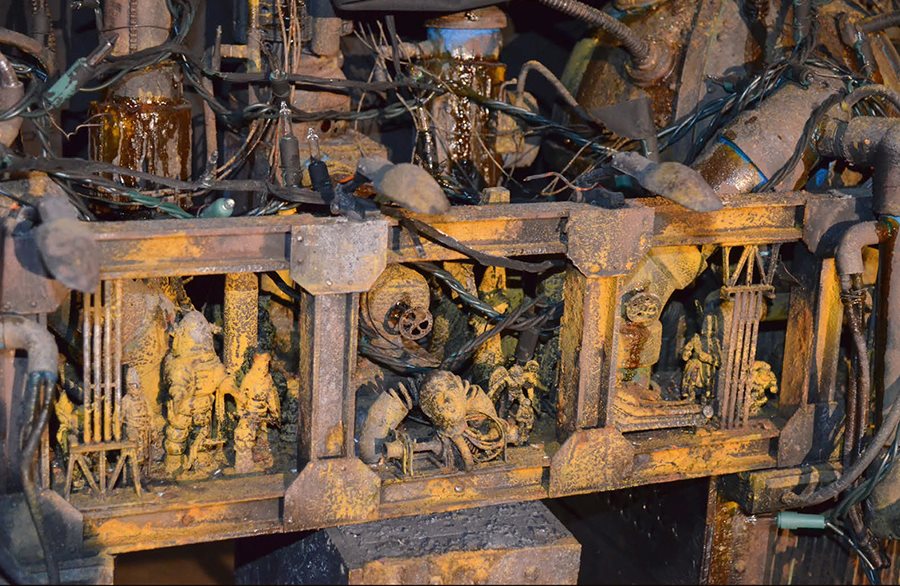
According to theater director Peter Brooks, a play becomes holy when it reveals the invisible, reflecting the elements of the world that escape our senses. (Brook 1968, 49) Unlike traditional narrative theater, the holy employs incantations, primal screams, and cyclopean set pieces with the goal to shock the audience from the profane world into a … Continue reading From Profane Accretion: Mad God’s Holy Animation→