Tag Archives: education

The Development of Early Chinese Animation Through Entertainment, Education and Ideology

The development of early Chinese animation is closely intertwined with China’s cultural policy, political movements, and educational initiatives, and cannot be fully understood without situating it in the historical and social context of the Republican era. This text explores how early Chinese animation developed at the intersection of entertainment, education, and ideology during this period … Continue reading The Development of Early Chinese Animation Through Entertainment, Education and Ideology→

The African Animation Studio as a Learning Institution

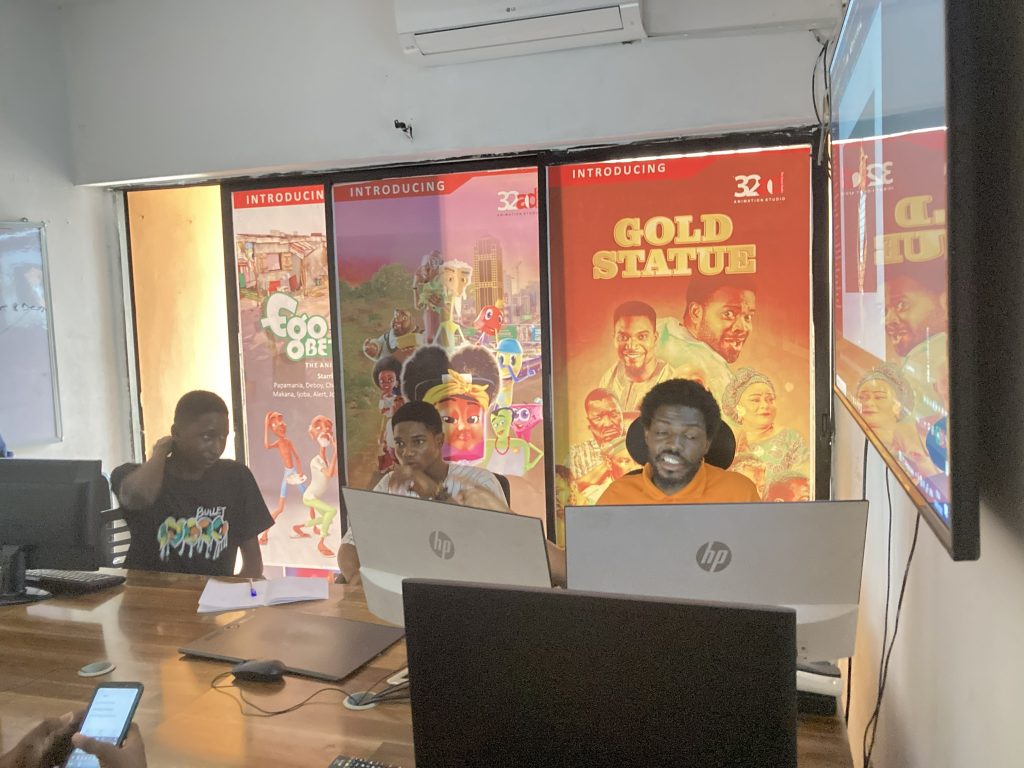
African animation scholars have discussed the role of formal art institutions in producing auteurs like Moustapha Alassane, Jean-Michel Kibushi, and Ebele Okoye (Callus 2018, Sawadogo 2019). In this piece, I propose that the African animation studio is a creative and learning center, a workshop that produces animation as well as animators. While individuals can take … Continue reading The African Animation Studio as a Learning Institution→

Histories of Useful Animation

We all know that animation has commonly been used to bring products to life, create dynamic visual aids for educational films, or provide a stimulus or communication tool for scientific experiments. Yet, in scholarly efforts to elevate animation as art or study it as entertainment, useful animation has often been neglected. Recent scholarship on ‘useful … Continue reading Histories of Useful Animation→

Animation and Synesthetics (Part I)

Revisiting Conversations Regarding the Interdisciplinary Nature of the Art “If the unity of art can be established with all the subject matters taught and exercised, then a real reconstruction of this world could be hoped for—more balanced and less dangerous.” —Lazlo Moholy-Nagy “The Contribution of the Arts to Social Reconstruction.”1943 Silly Symphonies. Merrie Melodies. Happy … Continue reading Animation and Synesthetics (Part I)→

‘Scrutinizing the Archive’: A Response to Chris Pallant

The recent post by Chris Pallant on the value of archives was indeed a great rally call for the value of the hidden treasures which archives can provide. As many of you know, I am one of those Chris identifies as ‘the familiar’ with the archive through my work on Norman McLaren and time spent … Continue reading ‘Scrutinizing the Archive’: A Response to Chris Pallant→

An Undergraduate Perspective on the 2019 Animation and Public Engagement Symposium

Thursday 19th to Saturday 21st September, Texas Tech University The 2019 Animation and Public Engagement Symposium (APES) held at Texas Tech University in Lubbock – thanks, among others, to the support of the Society for Animation Studies – brought together animation scholars and practitioners from all over the world. It was the first time that … Continue reading An Undergraduate Perspective on the 2019 Animation and Public Engagement Symposium→

10X10: A European Animation Project

The purpose of this post is to describe 10X10, an ongoing project initiated at Edinburgh College of Art, that each year brings animators and composers from a range of European universities together in a virtualized collaborative process. Currently, this project is being handled in a way that allows an interesting, but passive, survey of trends … Continue reading 10X10: A European Animation Project→

Pre-Cinema in the Classroom: The Philosophical Opportunity of Red Raven Movie Records

Not long ago I happened upon an original Reynaud praxinoscope for sale in a shop in Paris. Unable to justify its asking price, I began to research more affordable alternatives to share with animation students with whom I have made countless zoetropes, phenakistiscopes, thaumatropes, and flipbooks over the years. I have observed that studying and … Continue reading Pre-Cinema in the Classroom: The Philosophical Opportunity of Red Raven Movie Records→

Émile Reynaud and the Théâtre Optique: Thinking Animation

I like to start my animation history class by telling the students that I am going to show them the very first animated film ever made. I then proceed by showing Pauvre Pierrot (1892, by Émile Reynaud) without further comments. After watching the film, I tell them that something should be bothering them about what … Continue reading Émile Reynaud and the Théâtre Optique: Thinking Animation→