
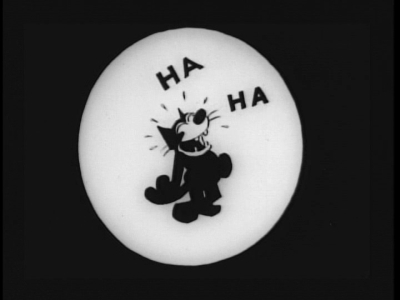
Paul Wells (1998) leaves out just one overlooked source of laughing in animated films in his otherwise brilliant chapter on “25 Ways to Start Laughing”. Namely that of a cartoon character laughing. Felix the Cat silently chortles his “Ha! Ha!” Mickey Mouse chuckles. Bugs Bunny snickers. Snoopy guffaws. Woody Woodpecker cackles. Beavis and Butthead snigger “Heh Heh Heh.” And Flash the Sloth slowly, very, very slowly, moves from a basic Duchenne smile to whole-hearted “boffo” laughter. The question for this study is what templates of laughter do animated films recommend to children? The diversity of chuckling and guffawing cartoon characters functions as a periodic table of benign and toxic modes of laughter, one that teaches children and adults how to laugh and at what.
Psychologists Donald Hayes and Dana Birnbaum (Anon, 1982) found that children watching cartoons remembered what they saw nearly twice as well as what they heard. When children see characters fighting and are told that violence is not the way to solve problems, they tend to remember the bashing rather than the moral lesson. Seeing is learning. We learn to laugh by watching cartoon characters laughing. Psychologist Robert Provine (2001) calls for an ethological study of human laughter. He notes that observing people laughing frequently evokes one’s own laughter, infected with the contagion of laughter. Biologist Ian Corbin (2023: np) identifies “mirror neurons” in the brains of macaque monkeys, recording how they were stimulated to imitate others’ behaviors. One does not just observe others’ actions, one “experiences it in part as if I were the one doing it.” Monkey see; monkey do. Such patterns of imitation risus shape the risible behavior of viewers, much like Konrad Lorenz’s (1935) famous research on the imprinting of ducklings attached to the first moving object they see after hatching. Looking at the nature of imitation in children, Susan Jones (2009: 2325) writes of the “young child’s ability to imitate the actions of others is an important mechanism for social learning—that is, for acquiring new knowledge.”
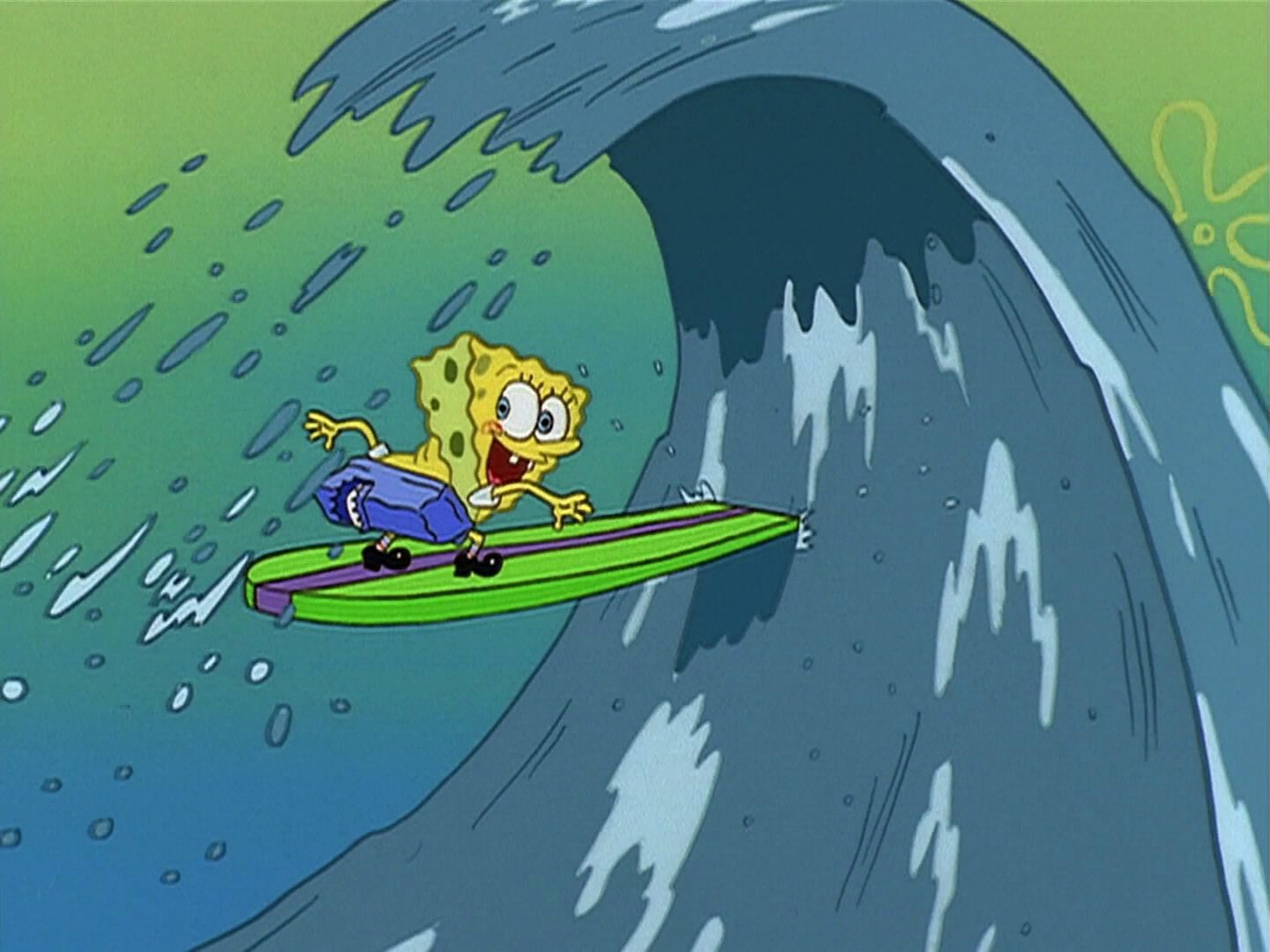
American poet Walt Whitman (1861: np) poetically captured the consequences of such a visual encounter. “There was a child went forth every day,” he penned, “And the first object he looked upon…that object he became.” Watching animated laughter, we learn to laugh in different ways. C. S. Lewis (1946) delineated four sources of laughter, each of which teaches what kind and quality of laughter a child observes and imitates. The most negative and aggressive laughter Lewis calls Flippancy, an arrogant and cruel laughter, often exemplified in what the Germans call Schadenfreude. Such mocking pops up among villains, such as the hyenas in The Lion King (1994) or Sid in Toy Story (1995). Flippancy teaches one to ridicule others who are different. The sneering titters of the little birds in Ralph Eggleston’s For the Birds (2000) follow suit, with their snickering at the larger gangly bird ending with their own comic comeuppance. Children may learn to chirp at an awkward classmate, but the lesson is clear. Characters laughing at the Joke Proper find a cognitive model of recognizing incongruity, in the contradictions and absurdities of life. In A Bug’s Life (John Lasseter, 1998), the self-effacing Queen Ant laughs about her lot in life. A supreme example of insect jokes occurs in the DVD commentary showing comic “outtakes.” The tyrannical leader, Hopper, looks at the Princess Atta and growls, “are you saying I’m stupid,” and she laughs, even on the 15th take. Tuck and Roll may not get the joke, but they laugh anyway. In “Ice Bowling” (2006) Curious George laughs when he invents a new way to bowl in icy conditions, a surprise that invites audiences to share the delight with him. However, some self-defeating jokes undercut a character like SpongeBob SquarePants who exploits his ripped pants repeatedly to get cheap laughs.
Play, or Fun, provides the most salubrious and infectious laughter, as its laughter is generally kinetic. As children laugh when they run, so the sheer delight of characters running, dancing, and playing leads to their laughing together, finding companionship and bonding. The laughter of fun offers a physical release or relief. It is laughter tied to being physical creatures, connected to the humus of the earth and humere of the water. Pixar’s little Piper (Alan Barillaro, 2016) learns to laugh in the water, a marvelous model for fearful children. Winnie the Pooh gently releases kindly chuckles after muddling through a “Think-think-think” thought in The Many Adventures of Winnie the Pooh (Wolfgang Reitherman, 1977). Such fun laughter brings characters together, creating a sense of fellowship, happiness, and well-being. Even silly Minions laugh together at their own folly in Minions (Pierre Coffin and Kyle Balda, 2015). Affiliative laughter also seeks to amuse others to facilitate relationships. Mike W., at the end of Monsters, Inc. (Pete Docter, 2001), laughs with the children he once feared. Pete Docter depicts Joy, the laughter of the heavens, as an exuberant, if possibly overbearing, joie de vivre that brightens the world. Joy, a transcending laughter of shalom and deep comedy, often touched with sadness, appears in Dianne Jackson’s Snowman (1982), where one soars through the heavens. Finally, I happily imitate Hanna-Barbera’s breathy “Muttley Wheeze” (1968) as I finish this essay.
References
Anon. “Cartoons are Seen and Not Heard” Psychology Today (June 1982), 78-79.
Atabey, Derya. “Cartoons” International Journal of Research in Education and Science (2021), 93-111.
Corbin, Ian “Loneliest Crowd” National Affairs (Summer 2023) https://www.nationalaffairs.com/publications/detail/the-loneliest-crowd (Accessed June 23, 2025).
Jones, Susan. “Development of imitation in infancy.” Philosophical Transactions of the Royal Society, , (2009), 2325.
Lewis, C. S. The Screwtape Letters (Geoffrey Bles, 1946), 57-60.
Lorenz, Konrad Z.“Der Kumpan in der Umwelt des Vogels: Der Artgenosse als auslösendes Moment sozialer Verhaltensweisen”, Journal für Ornithologie 83 (1935): 137–215, 289–413.
Provine, Robert Laughter: A Scientific Study. (Penguin, 2001)
Wells, Paul Understanding Animation (Routledge, 1998).
Whitman, Walt “There was a child went forth.” The Whitman Archive, (1861), https://whitmanarchive.org/item/ppp.00271_00470 (Accessed December 17, 2025).
Terry Lindvall occupies the C. S. Lewis Chair of Communication and Christian Thought at Batten University, formally known as Virginia Wesleyan. Terry holds a PhD from University of Southern California and has authored fifteen books, including Divine Film Comedies (Routledge, 2016), and Animated Parables (Lexington Press, 2023). He recently produced the documentary feature film, Hollywood, Teach us to Pray (2023) based on his book God on the Big Screen (NYU Press, 2019). He is currently co-authoring a book on Soren Kierkegaard and Pixar films, forthcoming with Routledge Press.. His laughter sounds like Tuck and Roll from A Bug’s Life.