
Deadline: April 24, 2026
Guest editor: Dr. Jennifer Nagtegaal
The foundations of Latin American animation are often traced, building on historical and biographical accounts by Giannalberto Bendazzi, to a single figure and place: Quirino Cristiani in Argentina, creator and director of the world’s first animated feature film El Apóstol, (1917). The current state of Latin American animation, however, resists such singularity. Today, Latin American animation unfolds as a dynamic, if asymmetrical, constellation of production and distribution practices across local studios, transnational co-productions, diasporic labor, commercial projects, festival circuits, and global streaming platforms.
This contemporary landscape includes auteur-driven works such as Hugo Covarrubias’s Oscar-nominated Bestia [Beast] (2023) from Chile and Guillermo del Toro’s Mexico, France, and USA co-produced Academy Award-winning Pinocchio (2022); commercial and entertainment-oriented feature films like the Chillian and Brazilian co-production, Germán Acuña’s Nahuel y el Libro Mágico [Nahuel and the Magic Book] (2020); animated adaptations in 2017 of comics such as Colombian-Ecuadorian cartoonist Powerpaola’s Virus Tropical (2011); documentary features like Jairo Eduardo Carrillo and Oscar Andrade’s Pequeñas voces [Little Voices] (2010) from Colombia; and Netflix animated series including José Alejandro García Muñoz’s Las Leyendas [Legend Quest] (2017) out of Mexico and Juliano Enrico’s Acorda, Carlo! [Wake Up, Carlo!] (2023) from Brazil.
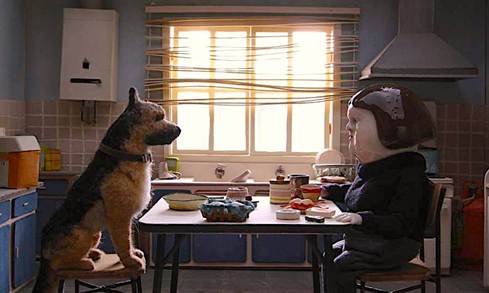
Fig. 1. Still from Bestía (Hugo Covarrubias, 2023). Source : Animation Magazine (2021), https://www.animationmagazine.net/2021/09/bestia-hugo-covarrubias-explores-the-secret-life-of-a-government-puppet/
To examine the full configuration of contemporary Latin American animation, this theme is approached through a focused lens that shifts the emphasis from the question about what Latin American animation is to a question about what Latin American animation does, as well as what it undoes. How does it operate within and against current conditions of its production? What aesthetic, political, and cultural work does it perform? And how might it unsettle the very frameworks through which it is understood?
For this theme we invite contributions that engage with the plurality of Latin American animation across national, regional, diasporic, Indigenous, and transnational contexts. Contributors are welcome to consider its intersections with comics and other media, emerging digital technologies such as VR and AR, its expanded forms, and its engagement with shifting cultural paradigms in a time that many are dubbing the age of post-postmodernism.
Possible discussion prompts include, but are not limited to:
- What does Latin American animation do in its local, regional, and transnational contexts?
- What does Latin American animation un/do, aesthetically, politically, or historically?
- What does it makevisible or render unseen or unseeable?
- What kinds of worlds does it construct, reimagine, or contest?
- How does Latin American animation circulate across borders, platforms, and audiences?
- How does it engagewith expanded animation practices across installation, performance, and digital or physical environments?
- What does the category “Latin American animation” itself do (and how might it be undone)?
We welcome posts that are:
- Between 800 and 1,000 words discussing any aspect of the above topics.
- Forwarded as a Microsoft WORD file.
- Include at least one image to visually support their argument/post.
- The images must be less than 2 MB in size per image and sent as individual files.
- Please indicate where the images should be placed in the text, including image caption(s) and credits. All permissions are the responsibility of the contributor.
- Include a short bio of 100 words max.
- Include 3 keywords.
Please fill it in all the required information for your submission here: Submission form
Please contact Jennifer Nagtegaal via jennifer.nagtegaal[at]ubc.ca with any questions, and CC co-editors Carmen Hannibal and Anastasiia Gushchina on blog[at]animationstudies.org.