
For decades, the audiovisual consumption of Disney animated classics in the Spanish-speaking world was defined by a centralized dubbing model that prioritized economic profitability and private market over regional linguistic diversity (Iglesias Gómez, 2009: 499). The history of this process reveals how economic, monopolistic, and political factors delayed the emergence of Peninsular Spanish and Catalan dubs in Disney movies for over half a century.
Historically, Disney’s Spanish-language dubbing began with disorganized efforts in Europe and the United States before consolidating in Argentina the dubbing of classics such as Dumbo or Bambi under the direction of Luis César Amadori (Ariza and Iglesias, 2011: 106). However, the most influential era was defined by Edmundo Santos, a Mexican born artist and entrepreneur, who established a monopoly on Disney dubbing from 1943 until his death in 1977. Operating primarily out of Mexico’s Estudios Churubusco and later his own studio, Santos imposed a style known as “neutral Spanish” (Brugué, 2013: 175) that could be intelligible for any Spanish speaker, devoid of localisms and the variety of accents of the previous era, with Disney classics being dubbed in Argentina. While the “neutral” dialect was perceived as unmarked in South America, it functioned as an exoticized linguistic medium for audiences in Spain, utilizing unfamiliar vocabulary and syntactic structures that deviated from Peninsular standards. As Iglesias Gómez notes: “This intended ‘universal’ Spanish has never been ‘neutral’ for the ears of the audience from Spain” (2009: 89).
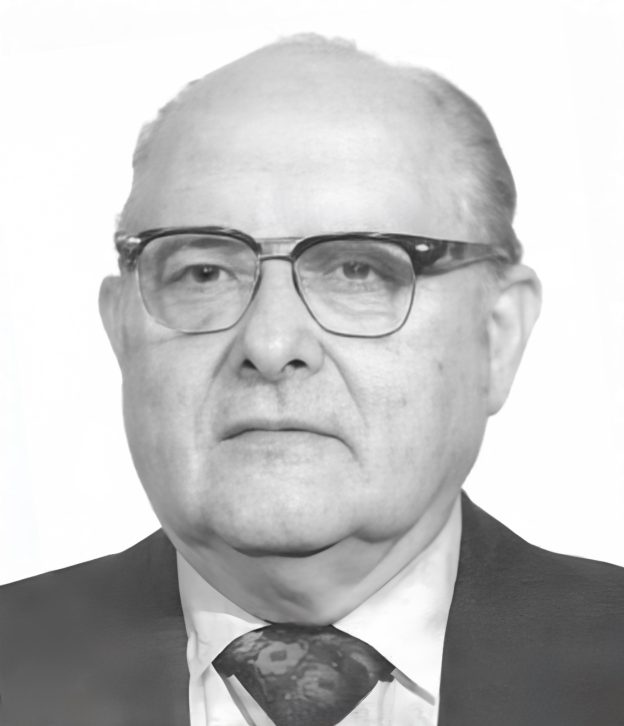
Figure 1. Edmundo Santos was a Mexican director, translator, singer, and voice actor who served as Walt Disney’s representative in Mexico. DoblajeDisney.com
This systemic reliance on a single linguistic variant out of the standard pronunciation promoted a cognitive dissociation for generations of Spanish children, who experienced a disconnect between the stories being told and the language through which they were conveyed. From the three semiotic codes that help children to decipher the translation of a movie (the linguistic, the iconographic and the musical), two are language-based. The appropriation of Disney’s imaginary was thus filtered through a marked South American acculturalization that did not hinder the brand’s implantation but did result in a sense of estrangement as a consequence of the linguistic variant used (De los Reyes, 2017: 17). Following his death in 1977, Santos’s work was continued by his brother-in-law, Francisco Colmenero. Along with his brother, Jorge Colmenero, they maintained control over Disney’s Spanish dubbing until the late 1990s, concluding their monopoly with Mulan in 1998 (Iglesias Gómez, 2009: 53).
In Catalonia, the delay in accessing films in the native tongue was even more pronounced than in Peninsular Spanish. The delays range from the 34 years’ period of 101 Dalmatians (that was first dubbed in Catalan in 1999) to 58 years in the case of Dumbo (originally released in 1941 and dubbed into Catalan in 1999) (Brugué, 2012: 179). This was due initially to the Santos monopoly and later on to the impact of the systematic marginalization of the Catalan language during the Francoist dictatorship (Pagès, 2025: 47). Although the prohibition of Catalan was lifted following Franco’s death in 1975, it took an additional 15 years for the first Catalan dubs to materialize. The landmark shift occurred around 1990, coinciding with Disney’s company decision to decouple Peninsular Spanish dubbing from Latin American enterprises, starting with Beauty and the Beast in 1991 (Iglesias Gómez, 2009: 53). Many of these early Peninsular versions were performed by Catalan voice actors who produced a version in Castilian in the Barcelona dubbing studio Sonoblok but did not perform any official dubbing version in Catalan (Beauty and the Beast being the first example of that paradox). Disney classics started to be regularly dubbed into Catalan as late as 1996 (Brugué, 2013: 179).
By the time some of the Disney classics were finally translated into Catalan, the cultural imaginaries they contained were often outdated, with unapologetically rigid roles for women or people of color, a simplified view of the concept of family and a conservative view of history that went being unchallenged (Giroux, 1995: 39). Consequently, modern distributors have found it necessary to warn contemporary audiences about racist and sexist content in older films such as Dumbo or The Aristocats that reflected the historical prejudices of the era in which they were produced.

Figure 2. Facade of the Sonoblok building, a dubbing studio located in Barcelona that was founded in 1970 and closed in 2013. In this studio, many of the Disney classics were dubbed on Spanish, and later on Catalan. Lorena Ruiz.
The shift to digital technology helped to introduce localization practices in Disney dubbing, which are understood as “the process of adapting a product to a specific country or market, in order to make it easier for the company to sell its products” (Camardiel, 2021: 29). After decades of imposing an artificial neutral Spanish to its dubbed classics, Disney franchise changed the way to represent ethnic cultures approaching dubbing and translation differently. In a recent example as Coco (2017), linguistic features were included in the use of Spanish words, Spanish songs, code-switching (language alternation) and Mexican pronunciation (Nieuwboer, 2019). Significantly, Coco is the only Disney movie that has not been localized (Camardiel, 2021: 29), because producers decided that the only Spanish version available was in Mexican Spanish, as the original accent was more relatable to a story rooted in typical Mexican culture.
The evolution of Disney’s linguistic policy reached a significant milestone with the film Encanto (2021). For the first time, a conscious effort was made to move away from theoretical neutrality toward being faithful to Colombian localisms. This transition from “neutral Spanish” to “localized dubs” represents a major shift in Disney’s diplomatic and commercial strategy. The “neutral” Spanish of the Santos era emerged from a very specific political context. Santos was hired by Walt Disney for the first time as an associate in Hello, Friends (1943) and The Three Caballeros (1944), cultural products that were used as a tool for diplomatic “Good Neighbor” propaganda (Keller, 2025: 225). Although Good Neighbor’s politics finished some decades ago, it was not until the nineties that the “neutral” Spanish was replaced by a model that acknowledges the specific linguistic identities of different Spanish-speaking nations.
The history of Disney dubbing in the Spanish-speaking world is a narrative of monopoly, global political needs, and slow linguistic liberation of regional communities. The late arrival of Catalan and Peninsular Spanish versions was the result of a deliberate corporate strategy that favored a single, profitable dialect over the linguistic rights of its diverse audiences. Today, the move toward localism in films like Encanto or Coco marks the end of a half-century of linguistic homogenization.
References
Ariza, M., and Iglesias, L. A. (2011). “The Use of Explicit Translation in Dubbing for Children. Two case studies”. In: Di Giovanni E. (ed.). Entre texto y receptor: accesibilidad, doblaje y traducción / Between textand receiver: accessibility, dubbing and translation. Berna: Peter Lang, 103-115. https://www.mercedesariza.com/pubblicazioni/bambi.pdf
Brugué, L. (2013). La traducció de cançons per al doblatge i l’adaptació musical en pel·lícules d’animació. Thesis. Universitat de Vic.
Camardiel Sardiña, L. (2021). The Translation of Disney Songs into Spanish: Differences Between the Peninsular Spanish and the Latin American Spanish Versions. Thesis. University of Hawai’i at Manoa.
De los Reyes Lozano, J. (2017). Bringing all the Senses into Play: the Dubbing of Animated Films for Children, Palimpsestes. Revue de traduction, 30, 99-115. https://doi.org/10.4000/palimpsestes.2447
Doblajesdisney. Biografía de Edmundo Santos. (2010, Enero 21). https://www.doblajedisney.com/biografia-de-edmundo-santos/
Doblajesdisney. Edmundo Santos and the Revolution of Dubbing in Disney. (2014, August 4). https://www.doblajedisney.com/index.php
Giroux, H. A. (1995). Animating Youth: the Disnification of Children’s Culture. Socialist Review, 24(3), 23-55.
Iglesias Gómez, L. A. (2009). Los doblajes españoles de los clásicos de Disney. Thesis. Universidad de Salamanca.
Keller, O. (2025). Saludos Amigos. Disney Propaganda for Latin America. The Americas, 82(2), 219–247. https://doi.org/10.1017/tam.2025.10076
Nieuwboer, M. E. (2019). Representation of Mexican Culture in Animation Films for Children: An analysis of Coco and The Book of Life. Master Thesis. Utrecht University.
Pagès, M. (2025). Animation in Spain: Magic Tricks, Drawings on Cels and CGI. London: Routledge.
Maria Pagès holds a PhD in Animation from University of Vic-UCC, and she has specialized in Spanish animation of the 1940s and 1950s, gender perspective and cinema. She is Senior Lecturer of 2D Animation at the Multimedia Image and Technology Center of Universitat Politècnica de Catalunya, where she is also part of the Digital Culture and Creative Technologies Research Group (DiCode). She has organized two seminars, one in 2016 on Spanish animation pioneers and another in 2017 on Women in animation, as well as participated in several conferences about animation and gender perspective, the last one in the 36th SAS Congress. She has coauthored a Gender Perspective Guide on Video Games (2025) and has published the monography Animation in Spain: Magic Tricks, Drawings on Cels, and CGI (2025) with Routledge. In 2026 she edited Contemporary Animation Research in Spain with the same publisher.