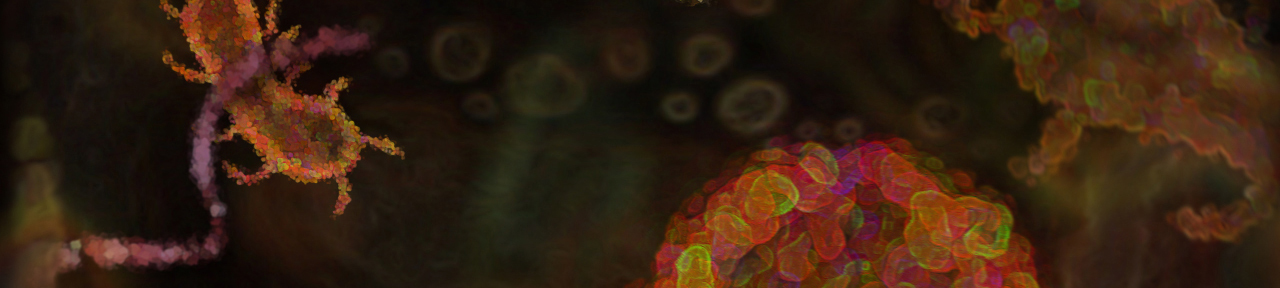
The Death of Gandji (La Mort du Gandji) (1965) is an animated short film directed and drawn by Moustapha Alassane. Widely regarded as one of the earliest animators in Niger, he produced his first animation during an internship at the National Film Board of Canada. Alassane’s short depicts a village of frogs under threat from a monster. Alassane demonstrates the ability to balance the styles taught by renowned Canadian animator Norman McLaren, including animating directly onto the filmstrip. This brief essay examines how The Death of Gandji incorporates the NFB’s education into a locally designed, produced, and delivered project of national identity. Examining the movements means considering the form and the materials used in production. To read the formal aspects means to produce a “reading for form [that] is a proceeding” of the material production (Brinkema, 2022, p. 260). These materials become the basis for a decipherment which uncovers the “counter-practices and forms” that remind subjects, viewers, and scholars that their experience “should in no instance be taken as any index of what the empirical reality of our social universe is.” (Wynter, 1992, p. 271). The Death of Gandji is not just important because of its proximity to the beginning of postcolonial animation in Africa. The film remains significant because of its formal and material articulation of its benefit to local production instead of a transnational one.
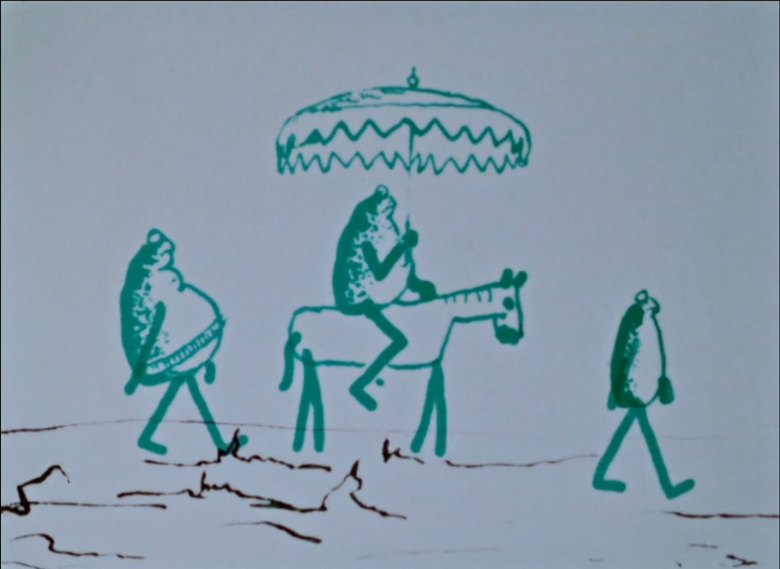
Figure 1: Three frogs traversing across the frame in The Death of Gandji (1965, dir. Moustapha Alassane)
The material language of The Death of Gandji articulates an acknowledgement of its education in the West while simultaneously staging a reclamation for Alassane and Nigerian filmmaking. Upon returning to Niger, the filmmaker worked on another animated short of frogs, Bon Voyage, Sim (1966), and the first Nigerian Western, Return of an Adventurer (Le Retour d’un aventurier) (1966). In each film, Alassane produced films using materials readily available to him alongside the practices informed by the training he received. Sada Niang writes, “For [Alassane’s] films, form is not only a matter of individual choice but also a mode of artistic expression.” (Niang, 2016). This claim of the expressive possibilities of the counterclaim formally begins at the onset of the title cards of The Death of Gandji. First, the National Film Board of Canada’s iconic eye animation. Then, another title slide with white basic serif introduces the background of the internship atop a black background. Finally, a hard cut to a blurry shot that is brought into focus, captured by a camera atop an animation stand in one continuous take. The logo, announcing “Afrique Films,” streaks across the frame with distorted, curved dimensions from the top left to the bottom right. Four faces depicting the diversity of Africa through its various styles of clothing occupy the four corners (Figure 2). Film critic Yasmina Price states that this move is a counterclaim to the NFB’s logo opening the film (Price, 2025). Formally, the film directly confirms this. The title card directly calls attention to the material education of the transnational production; simultaneously, Alassane claims the film for himself and the nation of Niger through a postcolonial story in its formal techniques.
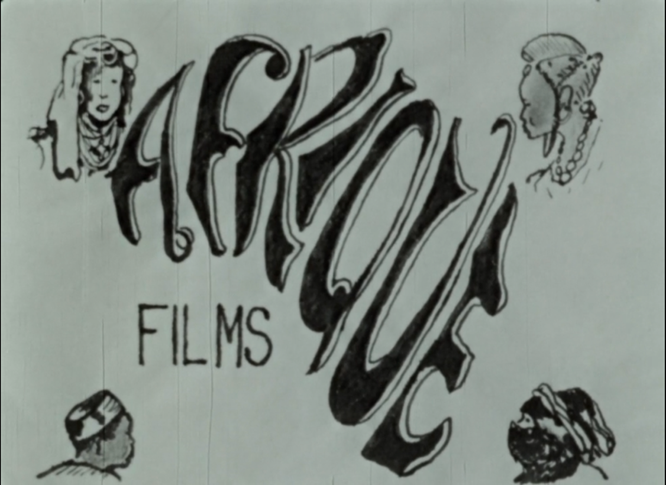
Figure 2: Afrique Films title card in The Death of Gandji (1965, dir. Moustapha Alassane)
Another instance of this formal articulation of this counterclaim on screen appears halfway through the film: three green frogs traversing across a black desert to investigate the whereabouts of a monster their village encountered only shortly before (Figure 1). A smaller frog leads the three, a larger one with a belt around its stomach trails behind, and one of average size with a small crown on its head rides what appears to be a horse in the middle while holding an umbrella. The bodies of the frogs and horse remain still: round, thick, thin lines, dotted bodies, and beady eyes. However, their arms and legs move with the precision of a pen on a film strip. The animation of the limbs of animals is one of the only lines moving atop static layers of animation. This style appears with the same erratic style as many McLaren shorts, like Hen Hop (1942) or Dots (1940). The pen animation of the limbs is composed through a direct animation where the lines jitter, smoothly move, and carry most of the movement atop stills captured by celluloid. Oppositely, the monster that they encounter is fully mobile, directly animated on celluloid in complete motion like the limbs of the frog. This formal movement now introduces the conflict: static bodies of the frogs and the moving physique of the monster as opposing forces. This carries the precision of direct animation to display a dialogue about its production and narrative.
A moment near the end of the film shows another form of experimentation from the NFB internship. Before this moment, the monster is shown as fully animated with the direct animation technique of the arms and legs. Their main sets of movement, borrowing traditions and flipping them into Alassane’s own, are drawn through lines and scratches on the film strip. At the end of the film, a praying mantis flips a boulder over a cliff to smash the unknowing monster. The boulder moves across the screen from top to bottom over a series of colors in the background: red, purple, blue, and off-white. However, as the rock hits the bottom of the frame and crushes the monster’s head, Alassane’s film utilizes celluloid scratches that change the inked world of the animation to one of abstract movement.
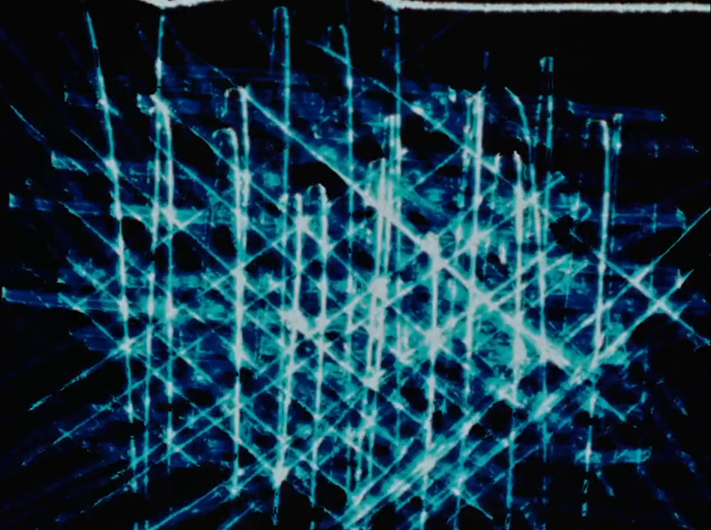
Figure 3: A frame of scratch animation in The Death of Gandji (1965, dir. Moustapha Alassane)
The scratched-out explosion near the end of the film echoes something like Blinkity Blank (1955, dir. McLaren), where the frantic energy of the lines moves from frame to frame. The frame flickers and flashes with black frames scratched in lines from left to right, circles near the center, crisscross patterns, and curved lines as the monster tormenting the village is crushed by the rock (Figure 3). Nine frames of this scratch animation with alternating frames of pitch-black shimmer across the screen, displaying wild patterns of scratches representing violence against the threatening, mobile monster. The brief instances of white light emerge through the scratches taking over the screen entirely. In a quick shot after the explosion, the viewer sees the encroaching monster has been killed before coming into the frog village, now rendered completely immobile in the frame. The narrative of a village overcoming a monster that suddenly appeared becomes a decipherable code of forms about the postcolonial landscape of Africa. The scratches bring an end to the monster that opposes the villagers through precise movements and manipulations of the film strip.
Within the short itself, these direct animation techniques appear to originate from the National Film Board of Canada’s internship. However, Alassane employs a unique approach by using the opening rhetorical move of the “Afrique Films” and the jittery styles that compose the movement of these frogs. This technique effectively flips the traditional filmmaking methods and incorporates them as an African animation technique. Using materials at hand after the internship, he transforms the frogs into a symbol he reanimates the following year, then again in stop-motion in Kokoa (2001). In each of his films, the practice becomes about defining a national identity in the artistic expression captured on screen. It is through this examination of the formal materials that we see what Hannah Frank means when she writes, “Animated cartoons serve a powerful documentary function. They show us parts of our world” (Frank, 2019, p. 2). In the case of The Death of Gandji, studying the frames of directly animated celluloid reveals a confident voice of taking tools and reclaiming them in a decolonial move. Despite the origin of the practice, the filmmaker’s passion for relying on the materials and storytelling of Niger becomes a national form of African animation formalized as a frog presented as a counterclaim.
References:
Brinkema, Eugenie. (2022). Life-Destroying Diagrams. Duke University Press.
Frank, Hannah. (2019). Frame By Frame: A Materialist Aesthetics of Animated Cartoons (D. Morgan, Ed.). University of California Press.
Niang, Sada. (2016). Nationalist African Cinema: Legacy and Transformations. Bloomsbury Publishing USA. eBook.
Price, Yasmina. (2025, October 27). The Politically Trenchant Fables of Animation Pioneer Moustapha Alassane. The Criterion Collection. https://www.criterion.com/current/posts/8957-the-politically-trenchant-fables-of-animation-pioneer-moustapha-alassane?srsltid=AfmBOoq4H3s8WO0k6d5XPbGKwm-c00VnpqVxno2IvpX9wCwfqDn6mBRy
Wynter, Sylvia. (1992). Rethinking “Aesthetics”: Notes Towards a Deciphering Practice. In M. B. Cham (Ed.), Ex-iles: Essays on Caribbean Cinema (pp. 237–279). Africa World Press.
T. R. Merchant-Knudsen is a Ph.D. candidate at North Carolina State University, where they have taught courses in communication and moving images. They have served as Image Editor for Film International (2017–2023) and as an Editorial Board Member (2024–2025). Their writings have appeared in Animation Studies, Film International, Language, Literature, and Interdisciplinary Studies, and other journals. They have presented at conferences including the Society for Cinema and Media Studies, the Society for Animation Studies, the Popular Culture Association, and the National Communication Association. Their research interests include intermedia sensory experiences, formalist analysis, animation, global film histories, visual rhetorics, and ambience in spectacular media environments. Beyond academia, MK is an independent filmmaker specializing in ambience, flickering, animation, and documentary.
Thanks for providing these insights of his animation process…I found it interesting.