Led by Chinese animation pioneers such as Te Wei and Tadahito Mochinaga, who was also known as Fang Ming, the Shanghai Animation Film Studio (SAFS) established in the late 1950s a singular visual modernity through traditional ink-wash animation. Masterpieces such as Cowboy’s Flute 牧笛 (Jiajun and Wei, 1963) (see figure 1) and Feelings of Mountains and Waters 山水情 (Wei, 1988) rejected the hard lines and contours that define the figures and grounds of early American animation in the likes of Disney and Fleischer, as well as Japanese senga-eiga line-drawing films, in favor of liubai blank space and soft ink dispersion. In these animations, strokes stretch and meander, and shades condense and rarefy. These diverse textures and delicate polychromatic washes produced a distinctive animation language and an “aesthetics of absence” (Du, 2019: 148).
Building on SAFS’s legacy, contemporary animations such as Fog Hill of Five Elements 雾山五行 (Lin, 2020-2023) and Nobody 浪浪山小妖怪 (Yu, 2025) integrate digital tools with traditional handmade techniques. This creates a hybrid ink-wash form, which is an aesthetic that reshapes classical figure-ground philosophies to construct a dynamic, distinctly cinematic spatial reality. Understood this way, this text sets out to examine how the hybrid ink-wash style’s flexibility is deployed to serve two primary functions. One for subverting traditional narrative hierarchies and expanding deep space via a highly fluid figure-ground relationship, and another that alternates between the concrete and the abstract.
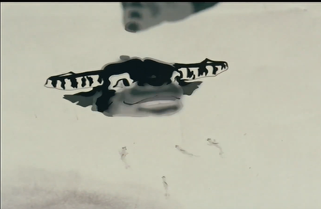
Figure 1. A screenshot from Cowboy’s Flute (Jiajun and Wei, 1963) that shows the concealed figure, which exemplifies liubai. © 1963 Shanghai Animation Film Studio, all rights reserved.
Recently named an Official Selection for the 2026 Annecy International Animation Film Festival, SAFS’s 2025 hit Nobody, directed by Yu Shui, marks a pivotal stylistic shift in ink-wash painting from a cultural strategy used to distinguish Chinese animation from Western cartoons into a direct cinematic function. By blending traditional aesthetics with modern digital rendering that combines Chinese ink-wash, watercolor, and digital washes, Nobody creates a hybrid visuality designed for complex narrative expression. As the producer Chen Liaoyu (2025, translated by author) notes, the animation technique now “serves the narrative and the cinematic space, rather than merely demonstrating… how beautiful ink-wash painting is.”
Emerging from this functional conception of ink-wash as a diegetic force, Nobody (2025) infuses mountainous landscapes and interior spaces, such as the King’s Cave and the Little Thunderclap Temple, with dynamic, volumetric lighting and narrative color grading. By actively utilizing classical liubai alongside perspectival rules, this digitally enhanced aesthetic generates a pronounced spatial realism as the camera moves through the animated environments.
Landscape as Narrative Force
Rather than populating the hybrid landscapes with conventional deities, Nobody (2025) turns the environment itself into a subversive tool. Beyond mere visual appeal, this formal synthesis functions as an active spatial and narrative device driving the animation’s underlying ideological critique. The plot also boldly shifts the narrative focus away from the canonical 16th-century Chinese novel Journey to the West that it was based on by replacing Tripitaka and his divine disciples with four lesser monsters whose real names the audience never learns.
Resisting the usual aestheticization and cutification of contemporary animation, the animation portrays the four protagonists—a pig, weasel, gorilla, and toad—as overworked peasants in drab garments, grounding their plight in a form of societal self-deprecation. Here, the visual complexity of the ink-wash background executes its most significant subversion. By blurring the boundaries between contoured figure and ground, the animation assimilates the four characters into the landscape (see figure 2). Reduced to high-contrast silhouettes that merge with the background, the established hierarchy is visually overturned. This spatial demotion reinforces the animation’s focus on the marginalized, ordinary figures who, as suggested in the ending credits “dare to begin.”
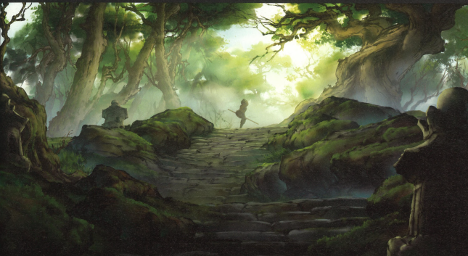
Figure 2. Screenshot of the canonical Sun Wukong rendered in silhouette in Nobody (Yu, 2025). © 2025 Shanghai Film Group, Shanghai Animation Film Studio, all rights reserved.
Minimalism versus Spectacle
The structural sophistication of the digital integration of characters and background does not negate the visual economy of the animation. Rather, the integration retains the minimalist core principles of traditional aesthetics. When contrasted with Chinese CGI-driven blockbusters like Ne Zha 2 哪吒之魔童闹海 (Yang, 2025), the calculated restraint of Nobody (2025) serves as a defining counterpoint. While Ne Zha 2 (2025) exemplifies what Mihaela Mihailova (2025) terms “spectacular digital maximalism” to describe the pushing of hyperkinetic action to overwhelm the senses, Nobody (2025) privileges stillness. Despite the digital virtuosity of its backgrounds, environmental movement is limited to the slow drift of clouds or village smoke. This preservation of liubai blank space and soft ink dispersion creates depth without sensory overload, directing attention to the characters’ journey and the thematic concerns.
Animating Space
Despite the affective minimalism of Nobody (2025), the hybrid ink-wash style displays spatial dynamism through shifts in foreground and background that resemble optical rack focus, where diffuse patches of color acquire hard edges matching the characters’ contours (see figure 3). The foreground and background relationship here, towards the end of the scene where the four protagonists stop by the pig’s hometown, undergoes multiple changes of focus that resemble rack focus shots. This agility in redefining action zones, combined with liubai, introduces playfulness into otherwise static backgrounds while maintaining narrative momentum.
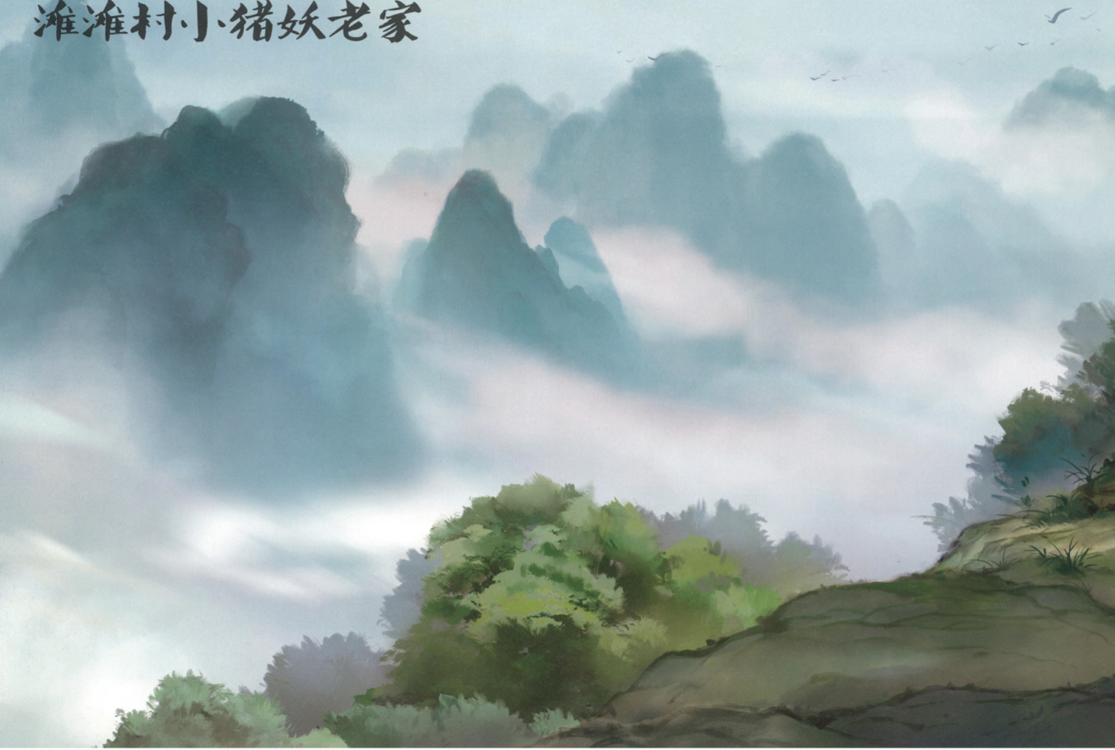
Figure 3. Original background layout of the Little Pig Monster’s hometown with a minimalist liubai design that undergo changes through rack focus in Nobody (Yu, 2025). © Shanghai Animation Film Studio, all rights reserved.
The pulling of a translucent element along the vertical z-axis from background to the foreground for distinct focus shift illustrates Daniel Morgan’s observation that such techniques create “a new and complex relation between the planes of the action” (Morgan, 2020: 301). Through this digitally augmented approach, Nobody (2025) grants 2D animation greater freedom along the z-axis, introducing new spatial complexity into the traditionally flat animation technique. In doing so, Nobody articulates a cinematic philosophy that is both minimalist and spatially dynamic, transforming the ink-wash background from a passive backdrop into an active, generative element of the film.
References
Chen, Liaoyu and Ding, Ning. (2025 December 11). The Distinctive Ink-Wash Visuals of Nobody. Wen Wei Po. https://www.wenweipo.com/a/202512/11/AP6939d152e4b0a034017d70fa.html
Du, Daisy Yan. (2019) Animated Encounters: Transnational Movements of Chinese Animation, 1940s–1970s. University of Hawai’i Press.
Mihailova, Mihaela. (2025 March 17) “Spectacular Digital Maximalism: Some Thoughts on Ne Zha 2 (2025).” Association for Chinese Animation Studies. https://acas.world/2025/03/17/spectacular-digital-maximalism-some-thoughts-on-ne-zha-2/
Morgan, Daniel. (2020) “Towards a Natural History of Animated Backgrounds.” Screen 61(2), pp. 296–305.
Shangying Yuan Cultural Technology Development Co., Ltd. (2025) Nobody: Film Art Collection 浪浪山小妖怪电影艺术画集. Zhejiang People’s Fine Arts Press.
Wu, Weihua. (2009) “In Memory of Meishu Film: Catachresis and Metaphor in Theorizing Chinese Animation.” Animation: An Interdisciplinary Journal 4(1), pp. 31–54.
Dong Yang obtained his Ph.D. in Comparative Literature from the University of Georgia in 2022 and is a visiting assistant professor of Chinese and East Asian Studies at Emory University (Oxford College) teaching East Asian animation, Global New Wave cinema, and film theory and film philosophy. His current research focuses on the concealment and abstraction of the animated image as audiovisual and narrative strategies in contemporary Chinese and Japanese animation. His other writings on animation have appeared in Film-Philosophy, Canadian Journal of Film and Media Studies, and the Association for Chinese Animation Studies.