
In the fall of 2024, I had the privilege of attending Chilemonos, the inaugural Vancouver edition of the long-running Chilean animation festival dedicated to fostering connections between Latin American and Canadian animation cultures. The festival’s culminating event was the round table “Our Voices” held at University of British Columbia’s Robson Square campus. The diverse program differed in technique and production context. In this post, I focus specifically on Gabriel Osorio’s In the Stars (Chile, 2023), produced by the animation studio PunkRobot which was founded by the Chilean animator himself, for the animated anthology series Star Wars: Visions Volume 2, as an example of what might be termed lociversality.

Figures 1. Chilemonos 2024 Official Poster. Source: https://chilemonos.cl/descargas/vancouver/CMH2024_Poster.pdf
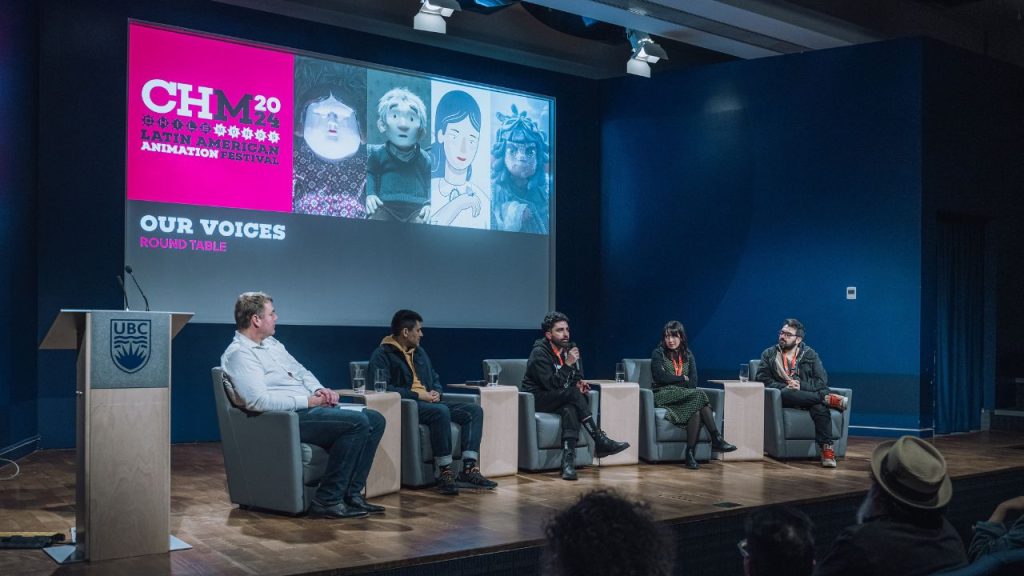
Figure 2. “Our Voices” Round Table led by Dr. Benjamin Bryce (Associate Professor in the Department of History at the University of British Columbia, and Chair of the Latin American Studies Program). Source: https://radixanimacion.com/noticias/chilemonos-vancouver-conclusiones-2024/
Despite their diversity, the films were united by their engagement with broadly recognizable concerns, from gender-based violence (Miguel Otálora’s Una porción por envase [One Serving per Can, Colombia, 2022] and memory (Sofía Rosales Arreola’s La casa de la memoria [House of Memory, Mexico, 2020]) to historical trauma (Hugo Covarrubias’s Bestia [Beast, Chile, 2021]) and the revitalization of Indigenous cultures (In the Stars). While some approached these issues through metaphor and allegory, rendering their narratives as universally legible, Osorio’s film demonstrated how animation can broach such themes in a particular cultural and historical context without sacrificing broader relevance. In doing so, it exemplified Latin American animation’s “lociversal” quality: stories deeply rooted in local realities yet capable of resonating across cultural and geographic boundaries.
This quality has become a trademark for Osorio, the Santiago-based animator, who gained international recognition with Historia de un oso (Bear Story, 2014), winner of the Academy Award for Best Animated Short Film in 2016. The film follows a former circus bear who builds an intricate mechanical diorama that reenacts the life he once shared with his wife and son before being taken from them against his will. Inspired by the experiences of political exile under the Pinochet dictatorship, it transforms a particular and deeply personal story – that of the director’s grandfather, Leopoldo Osorio (“oso” in Spanish means bear) – into a broad, emotionally resonant narrative for spectators who understand the suffering caused by the forced separation of a family (Fenoll 52).
With less subtlety, Osorio achieves the same lociversal negotiation with In the Stars. He co-wrote, edited, and directed the fifteen-minute film, which reframes the genocide of the Selk’nam people in Tierra del Fuego under the banner of colonial expansion through the iconography of Star Wars. The short follows two orphaned sisters, Tichina and Koten who are the last of their kind, as they navigate a world devasted by imperial occupation, particularly through the extraction of water.
The Star Wars franchise, which repeatedly links imperial expansion to resistance and cultural and familial continuity, provides a particularly effective lens for reimagining the history of the Selk’nam. Not least, Osorio explains, because “Star Wars, at its core, is mostly about families that are separated and overcome pain through hope,” making it “the perfect place to tell this story” (qtd. in Busch). It fits neatly into the franchise, parallelling in many ways The Mandalorian (2019–), where cultural heritage becomes a means of collective survival for the small population under the threat of being wiped out by imperial violence. In Punkrobot’s short film, the stars, only visible in the final moments once the pollution clears, function as symbols of Selk’nam cultural continuity, linking ancestral memory to future possibility, particularly for subsequent generations, embodied by the sisters. The countless stars become a literal constellation of cultural practices, symbols, histories, and memories that connect past generations to future ones.
Thus, In the Stars offers a critique of Chile’s current water crisis due to its ongoing privatization alongside questions of Selk’nam cultural resurgence and futurity, while simultaneously connecting to wider concerns with colonialism legacies and human rights. Speaking on behalf of his co-writers – Antonia Herrera and Francisco Ortega – Osorio notes that Latin America as a whole “went through similar processes of colonization at different times in history. We felt that there was a very important issue that we needed to address as Latin Americans” (Rodríguez). In other words, beneath, or even despite, In the Stars’s local textures, there lies a story recognizable throughout Latin America.
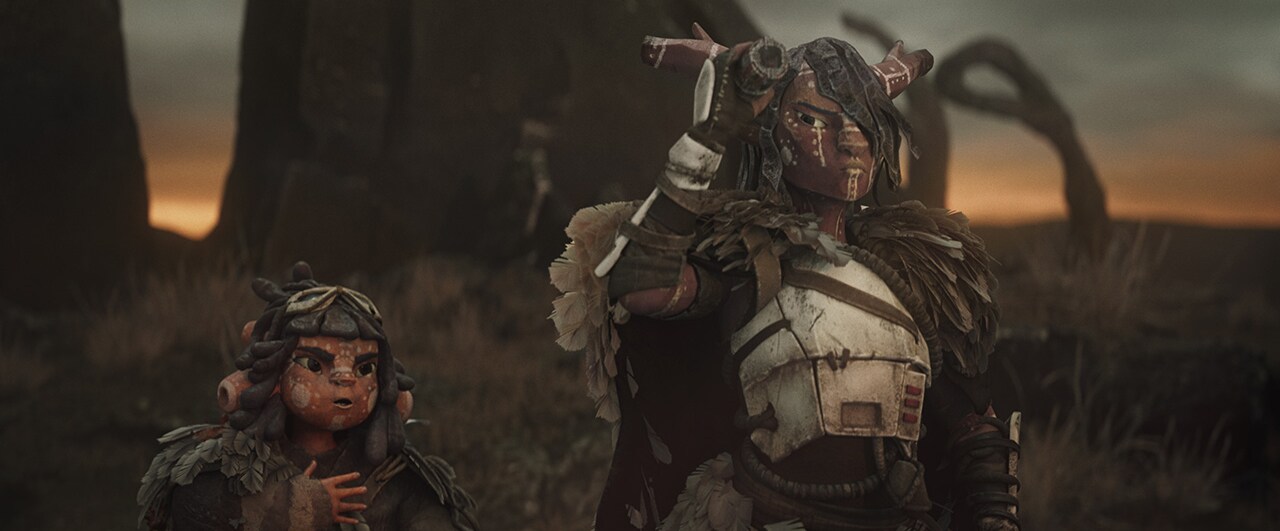
Figure 3. Still from In the Stars. Source: https://www.starwars.com/news/star-wars-visions-in-the-stars-interview
The film’s visual design further reinforces its lociversality. Research trips to Patagonia for the PunkRobot animation studio multidisciplinary team shaped the aesthetic development of In the Stars, while 3D scans of actual Patagonian landscapes, flora, and natural elements were integrated directly into the animated environment and the design of the characters. The result, in Osorio’s words, is a visual identity that embeds “some essence of Patagonia” within the iconography of the original Star Wars films (qtd. in Fabello).

Figure 4. Still from In the Stars. Source: https://www.starwars.com/news/star-wars-visions-in-the-stars-interview
Furthermore, if Star Wars is particularly suited to this story, animation, thanks to its “condition of being fabricated” (emphasis original, trans. mine, Hernández 6), is even better suited to it: as Betancourt suggests, animation is a medium “pushes back against colonial and capitalist ideas of what the world is, and can look like,” and allows filmmakers to “dream up lost histories and possible futures with equal ease” (79). Osorio’s short film participates in a wider lineage of Indigenous animation, including works supported by the National Film Board of Canada, that uses world-building to render visible forms of knowledge and experience frequently obscured – if not nearly obliterated – by colonialism and colonial modes of representation. If, as Brigitta Hosea argues, colonialism results in the destruction or marginalization of local and Indigenous knowledge systems (5), animation’s overtly fabricated nature offers a powerful counterpoint. The medium foregrounds its own fabricatedness or constructedness, allowing filmmakers to rebuild histories and ways of knowing that colonial narratives have sought to supress and even erase. Michif and Red River Métis creator Amanda Strong’s Inkwo for When the Starving Return (2024) for example – an animated adaptation of a short story by Tłı̨chǫ Dene storyteller Richard Van Camp – similarly draws on Indigenous cosmology and speculative storytelling to envision continuance, two lifetimes from now, beyond colonial violence and climate change.
PunkRobot Studio also pushes back against cinema’s commercial aims, as In the Stars was conceived to be primarily commemorative, and even political. The franchise-commissioned project becomes a vehicle for bringing “visibilitiy and valorization” to what remained a “little-known story” (trans. mine, Universidad de las Americas), aligning the film with the Chilean animation studio’s portfolio of politically-charged films. In the hands of PunkRobot Studios, the globally recognizable franchise is itself a vehicle through which local knowledge is mobilized, as In the Stars demonstrates how lociversal narratives can circulate through transnational popular culture whether made for local audiences or for those far, far away.
References
Betancourt, Manuel. “Animating History at a Cellular Level.” Film Quarterly, vol. 75, no. 2, 2021, pp. 76–79. University of California Press, https://doi.org/10.1525/fq.2021.75.2.76.
Busch, Jenna. “How Star Wars: Visions Season 2 Drew Inspiration From Real-World History of Colonialism,” 10 April 2023, https://www.slashfilm.com/1253856/star-wars-visions-season-2-inspiration-from-real-world-history-colonialism/.
Fabello, Jade. “The Chilean Influences Behind Star Wars: Visions’ In the Stars.” StarWars.com, 11 Dec. 2023, https://www.starwars.com/news/star-wars-visions-in-the-stars-interview. Accessed 7 Aug. 2026.
Fenoll, Vicente. “Animation, documentary and memory. The animated representation of the Chilean dictatorship.” Cuadernos. Info, vol.43, 2018, pp. 45-56.
Hernández, María Lorenzo. “Mundos imaginados.” Con A de animación vol. 13, 2021, pp. 6-9.
Hosea, Birgitta. “Decolonizing Animation.” Animation Practice, Process & Production, vol. 12, no. 1, 2023, pp. 3–10. Intellect, https://doi.org/10.1386/ap3_00040_2
Osorio, Gabriel, director. 2023. In the Stars (Season 2, Episode 6), Star Wars Visions 2. PunkRobot.
Rodríguez, Andrés. “‘In the Stars,’ a ‘Star Wars’ Story Inspired by the Indigenous Peoples of Patagonia.” El País, 14 May 2023, El País a Rodríguez, Andrés. “‘In the Stars,’ a ‘Star Wars’ Story Inspired by the Indigenous Peoples of Patagonia.” El País, 14 May 2023, El País article. Accessed 1 June 2026.rticle. Accessed 1 June 2026.
Universidad de Las Américas. “Estudio de Animación Punkrobot Gana Importante Premio Iberoamericano por su Cortometraje En las Estrellas (UDLA, Star Wars: Visions).” Actualidad UDLA, 15 May 2024, https://actualidad.udla.cl/2024/05/estudio-de-animacion-punkrobot-gana-importante-premio-iberoamericano-por-su-cortometraje-en-las-estrellas-udla-star-wars-visions/
Jennifer Nagtegaal holds a PhD in Hispanic Studies from the University of British Columbia, specializing in animation and comics studies. Her monograph, Politically Animated: Non-fiction Animation from the Hispanic World (University of Toronto Press, 2023), is the first book-length study of Spanish-language non-fiction animation, analyzing the political stakes of formal and narrative choices while exploring connections between comics and animation. She has also published essays on Spanish and Latin American comics and animation in journals including Bulletin of Spanish Studies, Bulletin of Hispanic Studies, and Revista Canadiense de Estudios Hispánicos, as well as in edited volumes such as The Routledge Companion to Gender and Sexuality in Comic Book Studies. Her current research examines expanded comics through a metamodernist lens, encompassing multimedia music-comics albums, operatized works, and exhibition-based projects, with a comparative focus on Spain, Latin America, and North America. Currently, Jennifer works in a research position for UBC’s Comics Studies Cluster as the Indigenous Comics Initiatives project manager and Comics-to-Research program manager.