
Latin American animation has received significant attention at festivals and trade fairs since the advent of the internet and the computerization of production methods. It has challenged the dominant ways of seeing and creating space for alternative worldviews and visual sensibilities through narratives dealing with political repression, historical trauma, and collective memory. Chilean animated short films that won the Academy Award for Best Animated Short Film and the Annie Award for Best Animated Short Subject, respectively, Historia de un Oso [Bear Story] (Gabriel Osorio Vargas, 2014) and Bestia [Beast] (Hugo Covarrubias & Martín Erazo, 2021), are examples of recognized artistic achievement. Other examples include the Argentine short Luminaris (Juan Pablo Zaramella, 2011) and O Menino e o Mundo [The Boy and the World] (Alê Abreu, 2014), a Brazilian feature film, both awarded at Annecy. This work of animation was also the first South American film to receive a nomination for the Academy Award for Best Animated Feature.
The reduction in production costs and greater ease of communication and access to information have enabled the exchange of experiences, the creation, and market forums, opened opportunities for co-productions and exhibitions. An email or an online form are incomparable conveniences compared to letters and post offices, customs seizing film reels, manual film developing and assembly, and other situations that only those born before the 1980s would have been familiar with. For example, I myself was required to pay import tax on a DVD of a short film officially registered as a Brazilian film (with a CPB number) when it was returned from a festival in Japan. Many other animators and I could only begin producing animation with the advent of digital filmmaking, as we lacked the budget required for analog production. In other words, while the talent and the ability to ‘create’ have always existed west of Greenwich and below the 31° 20′ N parallel, it has long been affected by significant financial and production constraints.
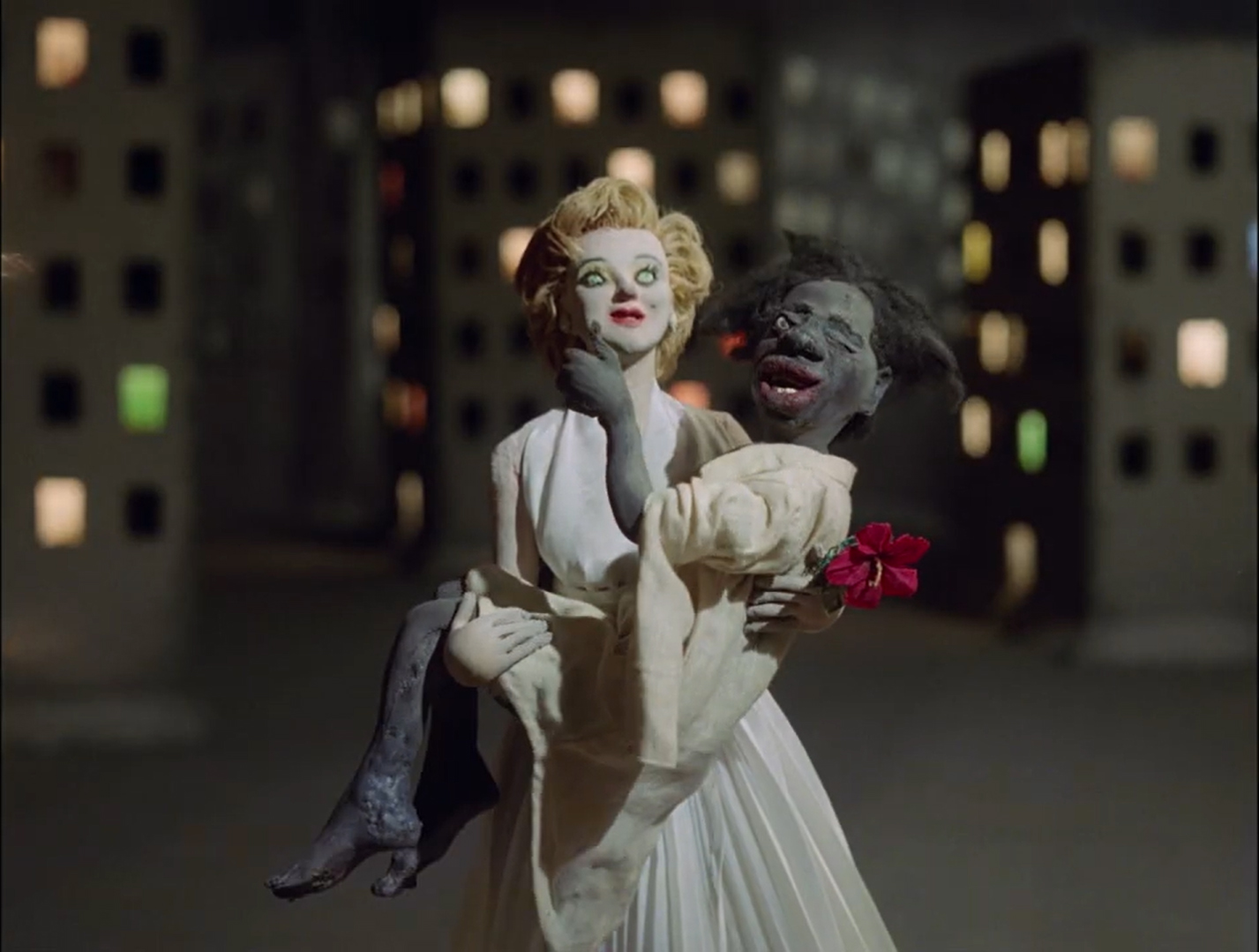
Figure 1. Still from De Janela Para o Cinema [Cinema From a Window] (Quiá Rodrigues, 1999).
For example, De Janela Para o Cinema [Cinema From a Window] (Quiá Rodrigues, 1999) used only one puppet for the main characters in the entire production, reflecting the material constraints faced by many independent Brazilian animators at the time. Despite these limitations, the film – conceived as a tribute to 100 years of cinema and highlighted at Cannes – casts Marilyn Monroe as the girlfriend of Macunaíma, the central character of an iconic Brazilian film based on Mário de Andrade’s 1928 novel. In doing so, it creates a hybrid imaginary by juxtaposing Hollywood imaginary with Brazilian modernist mythology. This way, Rodrigues put into practice Oswald de Andrade’s Anthropophagic Manifesto, which states, “I am only interested in what is not mine. Man’s law. Law of the Anthropophager [Cannibal]” (Gordeeff 2018, 92). Andrade’s Anthropophagic Manifesto, however, wasn’t just an artistic provocation, rather, it was a recognition of a deeper historical reality. What Andrade captured instinctively as an artist, Burke later articulated as a historian: that Latin America is, by its very formation, a region where “encounters, clashes, miscegenation and other interactions between the indigenous population, the European invaders, and the slaves whom the Europeans brought from Africa” had made hybridity as a defining condition. Despite European colonization and the resulting cultural matrix in these countries, the mixture described by Burke, created other layers of life experiences that were not absorbed by the parent countries. Nevertheless, in the Americas, cultures were mixed and blended, creating a cultural melting pot that also received immigrants from Europe, Middle East, and Asia in the 19th and 20th centuries. Therefore, the visual culture of these countries possesses a unique richness of meanings, beliefs, and symbols. Their historical processes resulted in a way of seeing and receiving, of critiquing what is seen and experienced in a very particular way. This was constructed through the need to adapt and was shaped through exploitation, slavery, and subjugation.

Figure 2. Still from Batuque [Drumming] (Stil, 1969).
This process was fundamental to creativity – fueled by resilience. As in Batuque [Drumming] (Stil, 1969), a Brazilian drawing animation made on bread-wrapping paper, which depicts many animals, flowers, national and foreign personalities changing one into another in a constant metamorphosis. These characteristics, creativity and resiliense, blossom through the arts. Animation is a unique art form that brings together all its forms, as was stated by my professor, Rui de Oliveira, who is also an animator, at Rio de Janeiro Federal University in 1990: drawing, representation, literature (poetry, prose, screenplay), dramaturgy, scenography, costume design, painting, sculpture, photography, and music. Each of the many Latin American societies possesses its own particular aesthetic form, which is reflected in the cinematic art it produces.
Let’s take Chile as an example: The harshness of European Spanish colonization created fertile ground for an elite lacking empathy for the nation’s people (Vergara & Mellado, 2018). The Chilean dictatorship was one of the most violent of the 1960s and 70s. Sympathy with Nazism was recounted in films like Bestia and in the animated feature film La Casa Lobo [The Wolf House] (2019) by Cristóbal León & Joaquín Cociña (El Mostrador, 2018). During the military dictatorship in Brazil, the short film Meow! (Marcos Magalhães, 1981) depicted a cat that was forced to drink Coca-Cola until it learned to appreciate it. Through this absurd gesture, Magalhães captured the asymmetrical pressure of cultural imperialism that accompanied geopolitical alignment. On a superficial level, the animated film denotatively criticized the strong influence of North American propaganda; connotatively, however, it criticized support for the dictatorship and cultural and moral pressures imposed on Chileans.
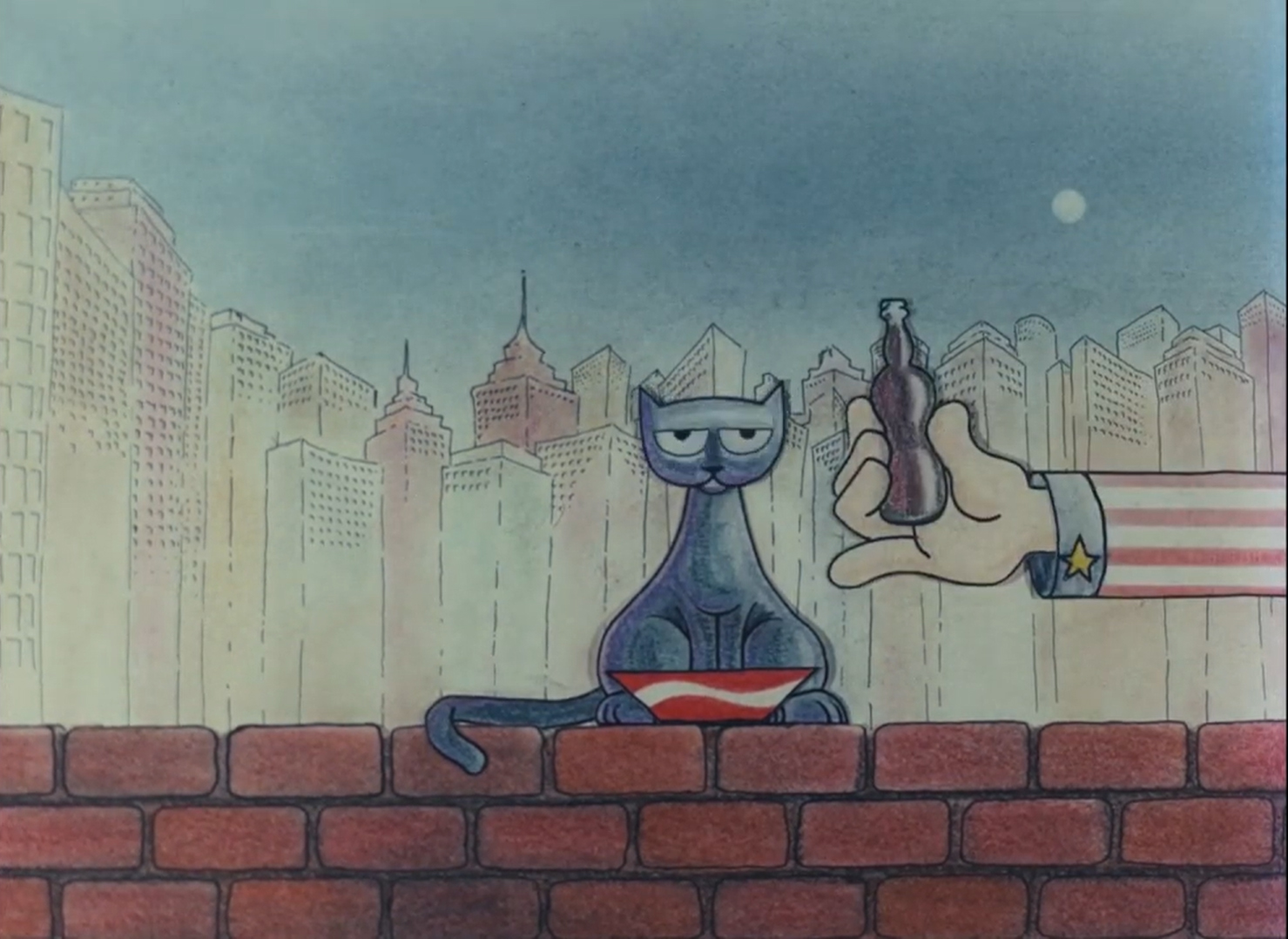
Figure 3. Still from Meow! (Marcos Magalhães 1981).
Two other significant films from Argentina and Brazil, respectively, are El Apóstol [The Apostle] (1917), the world’s first animated feature film (Bendazzi 1994), and O Kaiser [The Kaiser] (1917), considered Brazil’s first work of animation. Both offer political critiques. El Apóstol features President Hipólito Yrigoyen going to heaven to end corruption in Buenos Aires (the Argentine capital) but ends up setting the city on fire. O Kaiser criticizes the Kaiser of Germany in a satire in which he is presented as wanting to dominate the world. These two animations have already brought out the satirical and transgressive aspects of Latin American animation.
This leads to a compelling question regarding the geopolitics of taste. There is international recognition of Eastern European animated films, particularly those from the period of Soviet domination, for their strength and creativity in protesting and “deceiving” the censors of the time (which is a nice touch). However, some issues live in my mind: has the same consideration not been applied to LA animation? Are their aesthetics and narratives less legible for this consideration? Or does the politically charged quality that characterizes much of Latin American animation—its mocking edge (Otto Guerra’s City of Pirates, 2018), irony (Santiago Caicedo’s Virus Tropical [Tropical Virus], 2017), unsettling atmospheres (Santiago Bou Grasso’s Padre [Father], 2013), sarcastic bite (René Castillo’s Hasta los Huesos [Down to the Bone], 2001), and disturbing sensibility (Walter Tournier’s A Pesar de Todo [In Spite of Everything], created in the wake of the 2003 invasion of Iraq)—render it somehow less palatable to international curatorial frameworks?
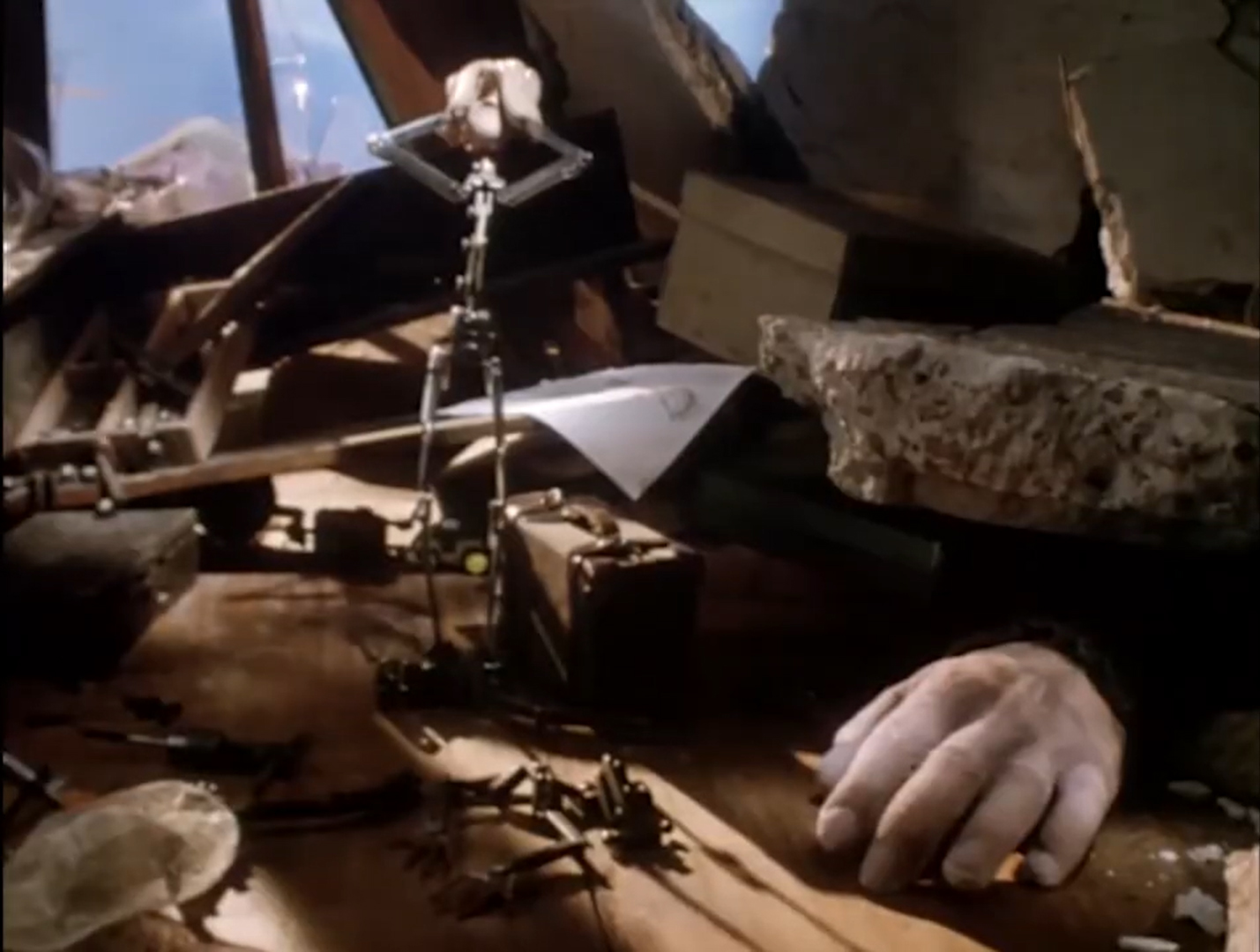
Figure 4. Still from A Pesar de Todo [In Spite of Everything] (Walter Tournier, 2003).
The Latin American perspective is different, because it sees the rest of the world from a contra-plongée camera (a low-angle cinematic perspective). This does not put them in a position of submission, but the opposite. Therefore, despite each country possessing its own aesthetic, Latin American animation offers a different way of seeing and invites global audiences to look at the world from an unfamiliar angle.
References
Abreu, A. (Director). (2014). O Menino e o Mundo [The Boy and the World] [Animated film]. Filme de Papel.
Bendazzi, G. (1994) Cartoons: One Hundred Years of Cinema Animation. Bloomington, Ind.: Indiana University Press.
Bou Grasso, S. (Director). (2013). Padre [Father] [Short]. Argentina.
Burke, P. (2008) Cultural Hybridity. Cambridge, UK ; Malden, MA : Polity Press.
Caicedo, S. (Director). (2017). Virus Tropical [Tropical Virus] [[Animated film]. Timbo Estudio.
Castillo, R. (Director). (2001). Hasta los huesos [Down to the Bone] [Short]. Mexico.
Covarrubias, H., & Erazo, M. (Directors). (2021). Bestia [Beast] [Short]. Trébol 3; Maleza. https://vimeo.com/692109352
Cristiani, Q. (Director). (1917). El Apóstol [The Apostle] [[Animated film]. [Produtora não identificada].
El Mostrador. (2018, março 22). Creadores de premiado cortometraje “La Casa Lobo”, inspirado en Colonia Dignidad: “Intentamos de alguna manera ponernos en la piel de Paul Schäfer” [Creators of the award-winning short film “The Wolf House”, inspired by Colonia Dignidad: “We tried in some way to put ourselves in Paul Schäfer’s shoes”]. El Mostrador. https://www.elmostrador.cl/cultura/2018/03/22/creadores-de-premiado-cortometraje-la-casa-lobo-inspirado-en-colonia-dignidad-intentamos-de-alguna-manera-ponernos-en-la-piel-de-paul-schafer/
Gordeeff, E. (2012) “Um Metaespetáculo: o corpo em A Pesar de Todo” [A Meta Spectacle: the body in, In Spite of Everything]. Revista :Estúdio. ISSN 1647-6158. Vol. 3, (5): 37-42.
Gordeeff, E. (2018) Aesthetic Interferences: The Stop Motion Technique in Animation Narrative. Lisbon: Books Factory.
Guerra, O. (2018). City of Pirates [[Animated film]. Brazil.
León, C., & Cociña, J. (Directors). (2019). La Casa Lobo [The Wolf House] [Animated film]. Diluvio.
Magalhães, M. (Director). (1981). Meow! [Short]. Embrafilme. https://www.youtube.com/watch?v=kPjHLP8Opng
Marins, A. (Director). (1917). O Kaiser [The Kaiser] [Short]. [Lost film; no indentified producer].
Osorio Vargas, G. (Director). (2014). Historia de un Oso [Bear story] [Short]. Punkrobot Studio.
Rodrigues, Q. (Director). (1999). De Janela Para o Cinema [Cinema From a Window] [Short]. Funarte, Decine CTAV, Q Filmes. https://www.youtube.com/watch?v=c3jo-qoo2L0
Stilpen, P. E. (Still) (Director and Producer). (1969). Batuque [Drumming] [Short Film].
Tournier, W. (Director). (2003). A Pesar de Todo [In Spite everything] [Short]. Tournier Animation. https://www.youtube.com/watch?v=y2OWRBLWll4&list=PLj3NWgbi0ZQc-75YZ3o-2kg8T5j-K6IgT&index=2
Vergara, J. I., & Mellado, H. (2018). “Political Violence Against the Mapuche in Chile, 1850-1929.” Journal of Historical Archaeology & Anthropological Sciences, *3*(6), 794–801. https://doi.org/10.15406/jhaas.2018.03.00168
Zaramella, J. P. (Director). (2011). Luminaris [Short]. JPZtudio; Sol Rulloni.
Eliane Gordeeff is an animator, professor, and researcher affiliated with CIEBA in Portugal and LAAD in Brazil. She holds a Ph.D. in Multimedia from the University of Lisbon, Portugal. She is a member of ASIFA, the Society for Animation Studies, and Casa da Animação. In 2018, she edited the book Aesthetic Interferences: The Stop Motion Technique in the Animation Narrative and became the correspondent for Portugal, Spain, and Brazil for the online animation journal Zippy Frames. Gordeeff has published more than 100 academic and non-academic texts, most of which are available online on ResearchGate, where they have reached over 16,000 readers. In addition, she coordinates a Portuguese-language index of academic texts published in Brazil, titled Acadêmicos da Animação.