
2026 marks the resurgence of animation’s most sophisticated anti-hero: Wile E. Coyote.
While he has spent decades in a cycle of recursive trauma, he recently moved from the desert to the courtroom in the film Coyote v. Acme1. This cinematic resurgence is based on Ian Frazier’s 1990 New Yorker humour piece2, where the Coyote sues the Acme Corporation for product liability. He alleges that their DIY devices, from rocket sleds[i] to spring-powered shoes, caused him repeated, “gruesome” bodily injury due to manufacturing defects.
Instead of weighing Acme’s corporate negligence, this post examines the philosophical case for your own liability.
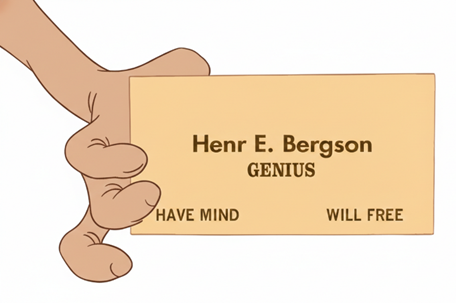
Figure 1. Henri Bergson (©2026 The Author)
By interrogating your internal “contract” with reality, I argue that your Bergsonian Grace, the habit of expecting the world to remain fluid and predictable, makes you the defendant.
My central claim is that animation’s strongest humour arrives through a secondary rupture: the moment where you stop judging the screen by your own reality and accept the “defect” as the logical standard of the animated world.
The Mock-Philosophical-(and not even remotely Legal) Framework
To understand the plaintiff’s claim, we must examine the four pillars of product liability presented in the case:
- Duty of Care: The manufacturer’s legal obligation to ensure products are reasonably safe.
- Breach of Duty: The manufacturer’s failure to meet that safety standard.
- The Defect: The specific flaw in design or manufacturing that made the product dangerous.
- Causation (The “But-For” Test): The proof that “but for” the product’s failure, the injury would never have occurred.
Why, despite the horrors of this creature’s fate, do you continue to laugh?
I. Duty of Care (or: The Allegation of Grace)
To examine this case, we must use phenomenology, the study of how we consciously experience and “inject” our lived history into the world. In this trial, you are the phenomenologically accused because your internal “contract” with reality is under scrutiny. Our methodology is grounded in Henri Bergson’s treatise, Laughter: An Essay on the Meaning of the Comic5. Bergson argues that laughter is a “social gesture” intended to punish “mechanical inelasticity”, the moment a living being behaves like a rigid machine. However, in animation, this punishment relies on Bergson’s lesser know Grace6: an “allegation” we hold against life. Grace is the deep-seated expectation, born of lived experience, that the world will remain legible and fluid. It is the “implied contract” where we assume consequences follow a familiar logic. As the defendant, you make this phenomenological presumption the moment you see Wile E. Coyote’s “30 miles of railroad tracks“. You aren’t just watching a drawing; you are projecting a lifetime of physics onto the screen, assuming the sled will travel horizontally. You demand Grace from the Coyote, and you are prepared to punish him if he fails to deliver it.
II. Breach of Duty (or: The Rupture of the Contract)
I claim you watched with “negligent” interest as those tracks were laid, fully aware they followed the Road Runner’s path. Your crime was to presume a “graceful outcome”. You projected your lived experience onto the screen, assuming a sled tethered to rails would naturally lead to a horizontal chase. In short, I accuse you of an act of Bergsonian Grace: a stubborn, instinctive belief in continuity. The “Breach” occurs when the rockets ignite—not to propel the sled forward, but to launch it straight into the stratosphere. This is a phenomenological rupture of your own manufacture. Your “implied contract” with reality is broken because you refused to imagine any outcome other than the one your habits dictated.
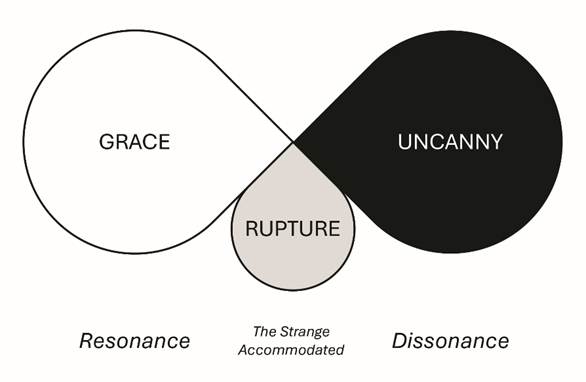
Figure 2. The First Rupture (©2026 The Author)
III. The Defect (or: The Second Rupture)
The first rupture, the vertical launch, is not actually what triggers the humour. It merely pushes you into this “grey space” where lived experience no longer applies and “cartoon logic” takes over. Here, reality flickers because something recognizable is behaving untrustworthily. Animation’s strongest humour arrives through the secondary rupture, or the defect. This second break doesn’t increase tension; it cancels it by reframing the event as logical within the animated world. As the phenomenologically accused, you commit this second rupture the moment you accept the vertical launch as perfectly logical—because rockets, after all, are “supposed” to launch into the sky. When you stop judging the screen by the rules of your own life and accept the cartoon’s internal consistency, you experience a bodily relief that surfaces as laughter.
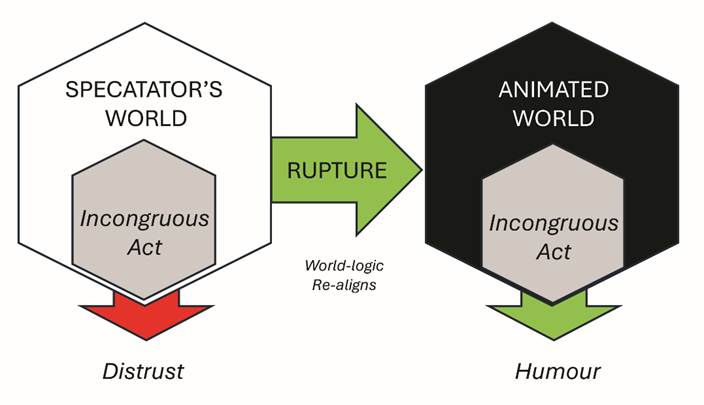
Figure 3. The Second Rupture (©2026 The Author)
IV. Causation: The But-For Test (or: The Phenomenological Engineer)
In this litigation, I argue that “but-for” your own teleological stubbornness, there would be no humour. You are the phenomenological catalyst for the joke’s completion. The “harm” of your laughter is a direct consequence of your refusal to abandon Grace. The rocket sled did not simply go up; it went up because you expected it to go forward. Without a spectator demanding that a sled on tracks behave like a sled on tracks, the Coyote would be merely a flurry of inconsequential drawings. Instead, you committed a cognitive bypass: you observed the sled defy nature and concluded the “defect” was not in the rocket, but in the laws of physics themselves. Your unyielding belief in causal grace, the idea that a track implies a destination, is what creates the friction necessary for the spark of wit.
Closing Argument: The Verdict of Laughter
We have tracked the Duty of Care (the allegation of grace), the Breach (the vertical launch), the Defect (the acceptance of cartoon logic), and the But-For cause of your own expectations. Now, we must confront the finality of the act: the verdict of your own amusement.
Your laughter is not a sign of innocence, but the ultimate proof of your complicity. By laughing at the Rocket Sled’s failure, you are sentencing Wile E. Coyote to a lifetime of recursive trauma. You punish him because his “mechanical failure” reminds you of your own fragile tether to a predictable world.
Your laughter is the sound of the spectator’s immunity being validated. You feel a “sudden glory”, the relief that it is his reality that has fractured, and not your own. Therefore, I move that the spectator be found phenomenologically liable. You did not merely observe a product failure; you consumed it.
The case of Coyote v. Spectator is closed. The injury is permanent, the defect is intentional, and your laughter is the only evidence we need of the “but-for” cause of this infinite, animated tragedy.
Endnotes:
[i] There is a degree of inconsistency in the reporting on this Rocket Sled, as it simultaneously describes events concerning a Jet Motor Bike3 and a true Rocket Sled4. For clarity I will use the Rocket Sled example.
References
- Vary, A. B. Coyote vs. Acme Lands August 2026 Release Date, Footage Debuts at Comic-Con Despite Acme Corp. Meddling. Variety https://variety.com/2025/film/news/coyote-vs-acme-release-date-comic-con-1236087522/ (2025).
- Frazier, I. Coyote v. Acme. The New Yorker 42–44 (1990).
- Gee Whiz-z-z-z-z-z-z. (Warner Bros. Cartoons, Burbank, CA, 1956).
- Beep Prepared. (Warner Bros. Cartoons, Burbank, CA, 1961).
- Bergson, H. Laughter: An Essay on the Meaning of the Comic. (Wildside, Rockville, Md., 2008).
- Bergson, H. Time and Free Will: An Essay on the Immediate Data of Consciousness. (George Allen and Unwin, London, 1910).
Jack Parry is a lecturer in Animation at Swinburne University of Technology. His research develops a philosophical animation theory of inscription by bringing deconstruction into dialogue with neurobiological accounts of time, memory and white matter. He explores how frame based media externalise traces of experience through timing, spacing, repetition, and the questioning of representation itself. Across scholarly and practice based work, he examines spectatorship, phenomenology, real and artificial intelligence, and how animated film production lies within these domains. He teaches animation production and theory, drawing on studio pipelines and screen cultures to connect technical decisions to conceptual questions. He has supervised undergraduate short film production, practice-led post-graduate masters and PhDs, and he develops curriculum that supports critical reflection alongside craft. He is based in Melbourne and collaborates across the disciplines of pedagogy, ethical AI, philosophy and neuroscience.